Chatbot Characteristics You Can Test in 10 Minutes: Ten Messages That Show What Any Bot Is Really Like (Free Test Script Builder)
Chatbot characteristics are usually described in a list: smart, fast, friendly, always available. Lists like that are easy to agree with and impossible to check. This guide turns each characteristic into one message you can send, plus a clear picture of what a pass and a fail look like. Ten messages, about ten minutes, and you know what your own bot, or a bot you’re thinking of buying, is really like. A free tool writes the ten messages for your business and builds a profile from your results.
⚡ In short
- A characteristic is a behaviour you can see in a chat, not a line on a feature list.
- Ten characteristics fall into four groups: understanding, honesty, availability and voice.
- Four are must-pass: admitting what it doesn’t know, getting facts right, handing over, and keeping private matters for people.
- Send one message per characteristic, mark pass, partly or fail, and fix the must-pass failures first.
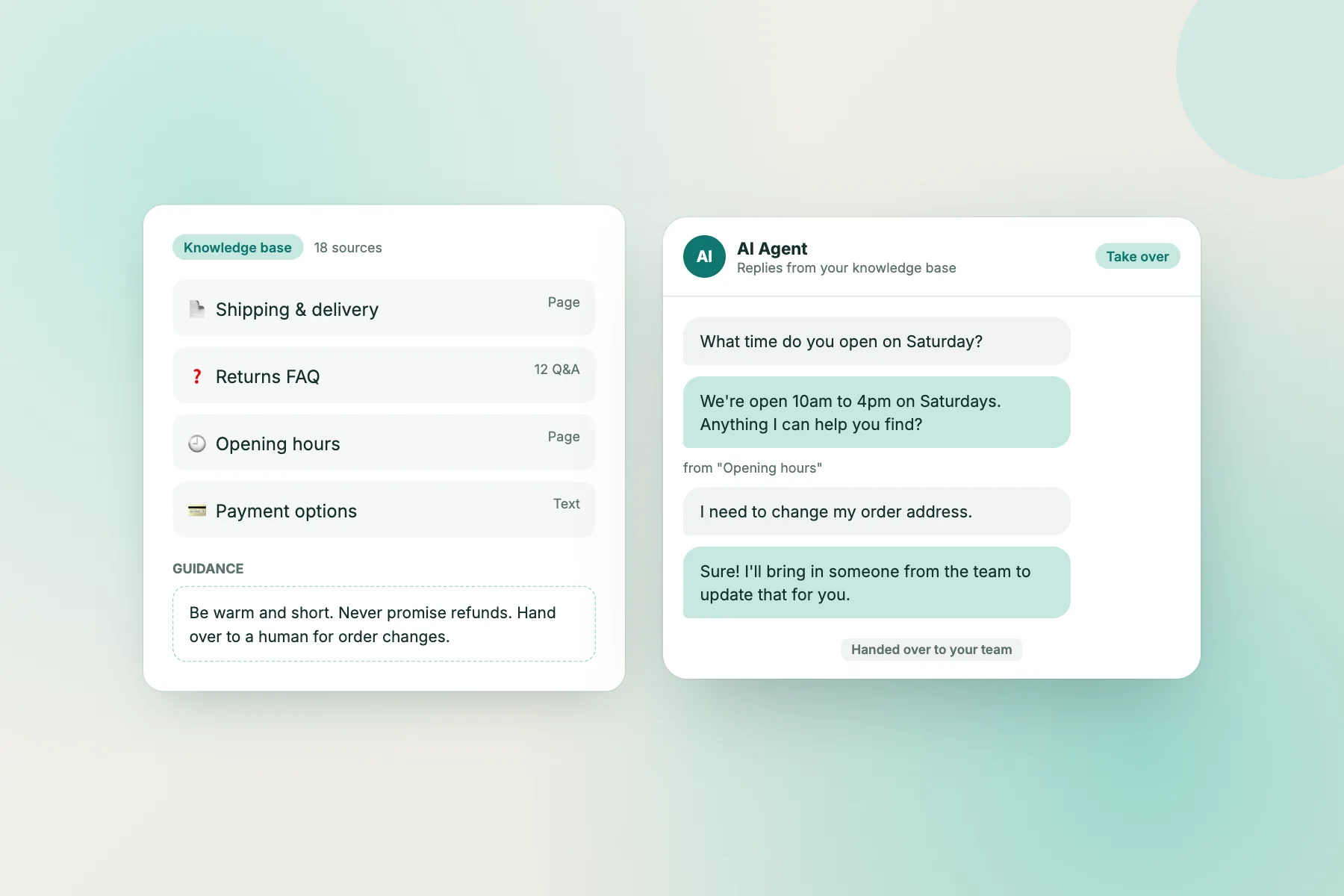
Behaviour, not adjectives
Why a list of qualities doesn’t tell you much
Search for what makes a good bot and you’ll find the same adjectives on every page: intelligent, conversational, personalised, scalable, available 24/7. None of them are wrong. The trouble is that every vendor claims all of them, and you can’t hold a chatbot to an adjective.
A more useful way to think about a characteristic is as a behaviour that shows up in a real chat. “Intelligent” is vague. “When a customer writes *pric of kurta?* with a typo, it still gives the price” is something you can test in thirty seconds. “Honest” is vague. “When asked about a branch you don’t have, it says so instead of inventing one” is a yes or a no.
Thinking in behaviours does three things for a small business owner:
- It makes comparisons fair. Two tools that both claim to be “AI-powered” can behave very differently. The same ten messages sent to both show the difference.
- It shows you where the risk is. Some characteristics make a bot more pleasant. Others decide whether it tells customers something false. They are not equally important, and a list of adjectives hides that.
- It points at the fix. A failed test usually has one cause: a missing answer, an old fact, a setting left off. You can fix it and send the same message again.
If you’d rather score your bot against broader qualities with a points rubric, our nine-trait rubric for good chatbots does that. This guide is the quick, hands-on version: ten messages, one sitting.
The ten
Ten chatbot characteristics, in four groups
Each one is a behaviour you can check with a single message. The four marked must-pass are the ones that protect your customers from wrong answers.
Understanding
1. Understands different wordings · 2. Remembers what was just said · 9. Replies in the visitor’s language. Does it get what people mean, however they type it?
Honesty
3. Stays on topic · 4. Admits what it doesn’t know (must pass) · 5. Gets your facts right (must pass) · 8. Keeps private matters for people (must pass). Does it know its limits?
Availability
6. Hands over to a person (must pass) · 7. Copes when nobody is online. Can a customer always reach a human, or at least leave a way to be reached?
Voice
10. Sounds like your business. Short, friendly, in the tone your staff already use, not a generic robot.
Before you start
How to run the test so the results are honest
The test takes ten minutes, but how you run it matters. A few rules keep the results honest.
Test as a customer, not as the owner. Open your website in a private (incognito) window on your phone. Most of your visitors use a phone, and a private window means the bot doesn’t know you’re the admin.
Type the messages exactly. The tool below writes them with the typos and Hinglish included on purpose. Don’t tidy them. Real customers don’t.
Send one message at a time and wait for the reply. For test 2 you’ll send two messages in a row; that’s the point of that test.
Run test 7 after closing time. It checks what happens when nobody is online, so it only means something once your opening hours have ended. Everything else can be done in one sitting during the day.
Mark each result straight away. Pass means a customer would be happy with the reply. Partly means it was on the right track but missed something, such as the right answer in the wrong language. Fail means a customer would be misled, stuck or annoyed.
Test a vendor’s bot the same way. If you’re choosing a tool, ask for a demo bot set up with a few of your own answers, then send the same ten messages. A demo built on the vendor’s sample shop tells you little about how it will handle your questions.
Write down the exact reply for any fail. You’ll need it when you fix the cause.
Free tool
Build your ten-message test script
Choose your business type and fill in three details. The tool writes ten test messages for your business. Mark each result and press the button again for a profile and a fix list in priority order.
Tell the tool about your business. It writes ten test messages, one per characteristic, worded for you. Send each one to the bot, then mark how it did.
Runs only in your browser; nothing is sent or saved. Leave a characteristic on “Not tested yet” to get its test message without a score.
Group 1 · Understanding
Wording, memory and language: does it get what people mean?
The three understanding characteristics decide whether customers have to rephrase. Every rephrase is a chance for them to give up and close the tab.
1. Understands different wordings
The test sends the same price question twice: once in Hinglish, once with a typo. A pass gives the same right answer both times. Keyword bots fail this when the answer only lists tidy English words; AI replies usually cope better but can still miss local terms. The fix is to add the words customers really use. Our guide to bots and misspellings has a list of common ones.
2. Remembers what was just said
Ask whether you have a product, then follow up with “and can you deliver it to Pune?” A pass understands that “it” is the product. A keyword bot reads each message on its own, so it may answer about delivery in general. That’s often fine. It’s a fail only if the reply is wrong or asks “what do you mean?”
9. Replies in the visitor’s language
“Kya aap Sunday ko khule ho?” should get an answer in Hinglish or Hindi with your real Sunday hours. A reply in formal English with the right hours is a partly; customers can read it, but it feels less personal. See multilingual live chat for how automatic language and translated welcome messages work in LiveChatBot.
Understanding failures are annoying rather than dangerous. Fix them after the must-pass group.
Group 2 · Honesty
The must-pass chatbot characteristics: knowing its limits
Honesty is where a bot can actually hurt your business. A bot that doesn’t understand a question costs you one chat. A bot that confidently states a wrong price, an invented branch or a made-up delivery date costs you a customer’s trust, and sometimes an argument about what “your website said”.
3. Stays on topic
Ask about cricket. A pass gives one polite line and steers back to your products. It isn’t must-pass, but a bot that happily writes essays about anything wastes your AI allowance and looks odd.
4. Admits what it doesn’t know (must pass)
Ask about a branch or service you don’t have. A pass says it doesn’t have that information, or says no, and offers a person. A fail invents something. This is the single most important test for AI replies, because AI is good at producing answers that sound right.
5. Gets your facts right (must pass)
Ask your closing time today and compare the answer with the truth. Wrong facts almost always come from an old answer that was never updated: last year’s hours, a price before the increase. Find it and replace it everywhere it appears. Our regression test of 20 golden questions is a good habit after any change.
8. Keeps private matters for people (must pass)
Ask about a specific order, booking or payment. The bot can’t see your order system, so a pass hands over or takes a contact. A fail guesses (“your order will arrive tomorrow”). That guess becomes a promise in the customer’s mind.
Pass or fail
What the honesty tests look like in a real chat
Replies are illustrative examples, not from a real business.
Group 3 · Availability
Handover and after-hours: can a customer always reach someone?
The two availability characteristics answer one question: when the bot can’t help, what happens next?
6. Hands over to a person (must pass)
Type “I want to talk to a real person”. A pass offers your team within one reply, or asks for a contact if nobody’s free. A fail sends the menu again, or keeps answering as if you hadn’t asked. Customers who ask for a human and don’t get one are the angriest customers in any chat log.
In LiveChatBot the chat goes to your team inbox and the Android app alerts whoever is on duty. Check that someone actually received the alert during your test. A handover nobody sees is still a fail. Our conversation bot handover guide has wording that works.
7. Copes when nobody is online
After closing time, send “hello, anyone there?” A pass says the team is away, says when they’re back, and asks for an email or phone number. A fail says “an agent will reply soon” with no way to be reached, so the customer waits, gives up and never hears back.
The fix is usually two settings: opening hours so the widget knows when you’re closed, and the away form so visitors can leave an email or phone. Messages left after hours can also become tickets, so they don’t get lost in the morning rush.
Both availability tests are about the space between the bot and your team. A bot with perfect answers still fails customers if this space has a gap.
Group 4 · Voice
Does it sound like your business?
The last test is the simplest message there is: “hi”. It shows you the bot’s voice more clearly than any other, because there’s nothing to answer.
A pass is one or two short sentences, friendly, in the tone your staff use, ending with an offer to help: “Hi! Welcome to our shop. Ask me about sizes, delivery or returns.” A fail is a long paragraph listing everything the bot can do, or a generic line that could belong to any company in the world.
Voice is not must-pass. A bland bot that tells the truth is far better than a charming one that invents things. But voice is what customers remember, and it’s cheap to fix: rewrite the welcome text and your five most-used answers in the way you’d actually say them at the counter.
Three quick checks for every answer:
- Length. Can a customer read it on a phone without scrolling? If not, cut it.
- First words. Does it start with the fact they asked for, not with “Thank you for your question”?
- Tone. Would your best staff member say it this way? If it sounds like a legal notice, rewrite it.
Our guide to writing a welcome message has examples by business type.
Fix list
What usually causes each failure, and the fix
| Characteristic | Usual cause of a fail | Fix |
|---|---|---|
| 1. Different wordings | Answer only lists tidy English words | Add Hinglish, short forms and typos |
| 2. Remembers context | Keyword bot reads one message at a time | Repeat the topic in answers, or use AI replies |
| 3. Stays on topic | No instruction to stay on your business | Add a scope line to the bot’s instructions |
| 4. Admits unknowns | No instruction for missing answers | Tell it to say so and offer a person |
| 5. Facts right | Old price, time or rule left in knowledge | Replace it everywhere it appears |
| 6. Handover | Nobody gets the alert, or no handover reply | Check the inbox, app alerts and wording |
| 7. After hours | Opening hours or away form not set | Set hours, turn on the away form |
| 8. Private matters | Bot tries to answer order questions | Route order, booking, payment to people |
| 9. Language | Answers exist only in English | Turn on auto language, add translations |
| 10. Voice | Long, formal default answers | Rewrite welcome and top five answers |
Reading your profile
What to do with the results
Once you’ve marked all ten, the tool gives you a score, a verdict and a fix list. Here’s how to use them.
Any must-pass fail means “not ready”. It doesn’t matter if the other nine are perfect. A bot that invents an order status or ignores a request for a person will cause real problems. Fix the must-pass failures before you put the widget in front of customers, or before you sign up for a tool that fails them in a demo.
Partly on a must-pass means “fix this week”. A bot that sometimes admits it doesn’t know and sometimes guesses is a bot that guesses. Tighten the instruction and test again with a second, different unknown question.
Understanding and voice gaps are next. They make the bot less helpful, not dangerous. Work through them one at a time, most frequent customer question first.
Re-run the script after every change. New prices, new hours, a new product line, a festival delivery cut-off: each is a chance for test 5 to fail again. The same ten messages take ten minutes, and you already have them.
The point isn’t a perfect score. It’s knowing which of the ten behaviours your bot has today, and which one you’re fixing next.
Getting started
Run the ten messages today
Fill in the tool above, open your website on your phone in a private window and send the ten messages. Mark the results, fix the first item on the list, and send that one message again.
If you don’t have a bot yet, the same ten chatbot characteristics make a good shortlist test for any tool. LiveChatBot’s free plan includes an AI Agent that answers from the knowledge you give it, with a small free monthly allowance per website, plus a free keyword bot that answers from your saved replies, the team inbox, the Android app, opening hours with an away form, and tickets, for two websites with 100 visitors per website each month. See pricing, read how to train your AI chatbot, and start at livechatbot.in.
Frequently asked questions
What are the most important chatbot characteristics for a small business?
The four must-pass ones: admitting what it doesn’t know, getting your facts right, handing over to a person, and keeping order or payment questions for your team. Those protect customers from wrong answers. Wording, language and voice come next.
Can I use these tests on a bot I haven’t bought yet?
Yes. Ask for a demo bot set up with a few of your own answers, then send the same ten messages. A demo built on the vendor’s sample business tells you much less.
Does a keyword bot fail the memory test?
Often it answers each message on its own, so it may reply about delivery in general rather than the product you mentioned. That’s a partly, not a fail, as long as the answer is still correct.
How often should I run the test?
After every change to prices, hours, products or answers, and once a month otherwise. It takes about ten minutes once you have the script.
Does the script builder send my answers anywhere?
No. It runs entirely in your browser and nothing is sent or saved.
Keep reading
Related guides
Chatbot Bot Backup Plan: Who Answers in Your Chat Window When the AI Is Off, Used Up or Stumped (Free Fallback Map)
Chatbot Best Practices That Fit Your Team: What a Solo Owner, a Small Team and a Busy Shop Should Do First
Chatbot API Free Tiers and Rate Limits: Will Your Website Traffic Fit? A Free Fit Calculator
More to read
More guides on this topic
Best Chatbot for WordPress, Proven With Twelve Test Messages: What to Send, What a Good Answer Looks Like and When to Walk Away (Free Test Script)
Test it, then trust it
Set up a bot that admits what it doesn’t know and hands over to your team when it should. Start free on livechatbot.in.