AI Bots Meaning Depends on Where You Hear It: Chat, Social Media, Search, Trading and Spam Bots Explained
AI bots meaning shifts depending on who’s talking. A shop owner means the assistant in their website chat; a journalist might mean fake accounts on social media; a website developer might mean the crawlers indexing their pages; an investor might mean automated trading. This field guide explains seven kinds of bots you’ll hear about, what each does, and how to tell helpful bots from harmful ones.
⚡ In short
- ‘Bot’ just means an automated program; ‘AI bot’ means one that uses artificial intelligence.
- Some bots are helpful (chat assistants, search crawlers), some are neutral tools, and some are harmful (spam, fake accounts, scalpers).
- Two questions judge any bot: is it honest about being a bot, and does it serve the people it interacts with?
- For businesses, the useful kind is a chat assistant that answers customers and hands over to people.
The common thread
What all bots share
At its simplest, a bot is a program that does something automatically that a person might otherwise do: answer a question, read a web page, post a message, place an order. The word comes from “robot”, but no physical machine is involved; it’s all software.
An AI bot is a bot that uses artificial intelligence to decide what to do, rather than following only fixed rules. That might mean understanding a customer’s question in ordinary language, recognising patterns in market prices, or writing social media posts that sound human. The AI part is what makes modern bots flexible and, sometimes, convincing enough to be mistaken for people.
That’s why the AI bots meaning in any conversation depends so much on context. The same underlying technology can power a helpful shop assistant or a network of fake accounts. Understanding the different kinds helps you use the good ones well and spot the bad ones quickly.
Seven kinds
A quick tour of the bots you’ll hear about
Click each to see what it does, where you meet it, and whether it’s usually good or bad.
What they do: answer questions in a chat window on websites, apps or messaging, using your knowledge, and hand over to people when needed.
Where you meet them: online shops, banks, telecoms, clinics, software products.
Usually: helpful, when honest about being a bot and well-informed. Annoying when they hide the human or answer wrongly. See what a chatbot is.
What they do: visit web pages automatically to index them for search engines, so people can find them.
Where you meet them: you don’t see them, but they visit every public website.
Usually: helpful and essential for being found online. Well-behaved crawlers follow rules websites publish about what may be crawled.
What they do: post, like, reply or follow automatically. Some are labelled and useful (news alerts, weather updates); others pretend to be real people.
Where you meet them: on social platforms, in replies and comment sections.
Usually: mixed. Labelled bots can be useful; undisclosed fake accounts used to inflate popularity or spread misleading content are harmful.
What they do: buy and sell stocks, currencies or crypto automatically based on rules or AI predictions.
Where you meet them: trading platforms and apps; also in advertisements promising guaranteed profits.
Usually: a neutral tool in professional hands, but promises of guaranteed returns are a classic scam sign. Be very cautious.
What they do: play games automatically, as computer opponents or, in online games, as automated players farming rewards.
Where you meet them: single-player opponents (fine) and multiplayer games (often against the rules).
Usually: fine as built-in opponents; unfair when used to cheat other players.
What they do: fill forms and chats with junk, post links, try stolen passwords, or message people to trick them into sharing OTPs or money.
Where you meet them: contact forms, comment sections, website chats, messaging apps.
Usually: harmful. Block them and never share codes or payment details. See keeping chats free of spam.
What they do: buy limited items, such as concert tickets or limited-edition products, faster than people can, to resell at higher prices.
Where you meet them: ticket and product launches that sell out in seconds.
Usually: harmful to ordinary buyers. Sellers use queues, limits and checks to fight them.
Judging any bot
Two questions that sort the helpful from the harmful
Whatever the AI bots meaning in a given situation, it helps to have a simple test you can apply to any bot you meet. Two questions do most of the work.
1. Is it honest about being a bot?
Helpful bots say what they are. A website assistant that introduces itself as the shop’s bot, a social media account labelled as automated, a crawler that identifies itself to websites: all are being straight with people. Harmful bots usually hide it, pretending to be real customers, real fans or real people in need.
2. Does it serve the people it interacts with?
A chat assistant that answers your question serves you. A crawler that helps people find your website serves you too. A scalper bot that buys tickets before you can, a spam bot that floods your inbox, or a scam bot after your OTP serves someone else at your expense.
If a bot passes both questions, it’s probably fine. If it fails either, be careful. This test works whether you’re a customer meeting a bot or a business deciding how to use one.
Spotting bots
Signs you might be dealing with an undisclosed bot
Not proof on their own, but worth noticing together.
Instant replies at all hours
Fine for a labelled assistant; suspicious from a ‘person’ who never sleeps.
Generic, repetitive messages
The same phrases across many accounts or chats.
New or empty profiles
Recently created accounts with few genuine posts or connections.
Pressure and urgency
‘Act now’, ‘your account will be blocked’, ‘guaranteed profit’.
Requests for codes or money
The clearest sign of a scam, bot or human.
Off-topic answers
Replies that ignore what you actually said.
For website owners
The bots that visit your site, good and bad
If you run a website, several kinds of bots are already part of your daily life, whether or not you’ve added a chat assistant.
Crawlers help you get found
Search engine crawlers read your pages so they can appear in search results. They’re essential. Your website platform usually handles the settings that guide them.
Bot traffic can inflate your numbers
Some visits in your analytics come from bots, not people. Good analytics tools filter the obvious ones, but sudden spikes of short visits from unusual places are often automated.
Spam bots target forms and chats
Contact forms and chat windows attract junk. Close junk chats without replying, block repeat offenders, and never click links sent by unknown visitors. LiveChatBot lets you block a visitor or an IP address.
A chat assistant is the bot you choose
Unlike the others, a chat assistant is one you add deliberately to serve your visitors: answering common questions instantly, collecting messages when you’re away, and passing complex conversations to your team. That’s the one kind of AI bot most small businesses actively want.
For everyone
Staying safe around bots
Most bots you meet are harmless or helpful. A few habits keep you safe from the rest.
- Never share OTPs, passwords or card details in any chat, comment or direct message, however official it looks.
- Be sceptical of guaranteed profits from trading bots or investment ‘opportunities’ in messages.
- Check before you trust a crowd. Hundreds of glowing replies or reviews may be automated.
- Use official channels for anything involving money or accounts: the company’s own app or website, not a link in a message.
- Report suspicious accounts on the platform where you found them.
In India, financial fraud and online scams can be reported at cybercrime.gov.in or by calling the 1930 helpline. Acting quickly matters, especially when money has been sent.
Quick reference
The seven kinds at a glance
| Kind | What it does | Usually | Honest about being a bot? |
|---|---|---|---|
| Chat assistant | Answers questions, hands over to people | Helpful | Should be |
| Search crawler | Indexes web pages for search | Helpful | Yes, identifies itself |
| Social media bot | Posts and interacts automatically | Mixed | Good ones are labelled |
| Trading bot | Buys and sells automatically | Neutral tool; scam risk in ads | Varies |
| Game bot | Plays automatically | Fine as opponents; unfair when cheating | Varies |
| Spam / scam bot | Floods, tricks, steals | Harmful | No |
| Scalper bot | Buys limited items to resell | Harmful to buyers | No |
Why it matters now
Why understanding the different kinds matters more every year
A few years ago, most people only met bots as clunky menus on customer service lines. Today, AI makes bots far more capable and far more common, which raises the stakes on both sides. Helpful bots can now answer questions in natural language at any hour. Harmful ones can write convincing messages, imitate real people and operate at enormous scale.
That’s why a clear grasp of the AI bots meaning is useful for everyone, not just technologists. Parents benefit from knowing how scam bots approach young people. Small business owners benefit from knowing which bots to welcome on their website and which to block. Customers benefit from knowing when to trust an assistant’s answer and when to ask for a person.
What’s likely to change
Expect more labelling and disclosure rules for automated accounts, more businesses using chat assistants for routine questions, and continuing efforts by platforms to fight spam and fake accounts. Whatever changes, the two judging questions stay useful: is the bot honest about what it is, and does it serve the people it talks to?
The helpful kind
Putting a helpful AI bot on your own website
If this guide made you think about adding the helpful kind to your business, keep the two judging questions in mind as design rules. Make the bot honest: say in the welcome line that a bot answers first. Make it serve your visitors: give it your real facts, keep answers short and specific, and let people reach a person easily.
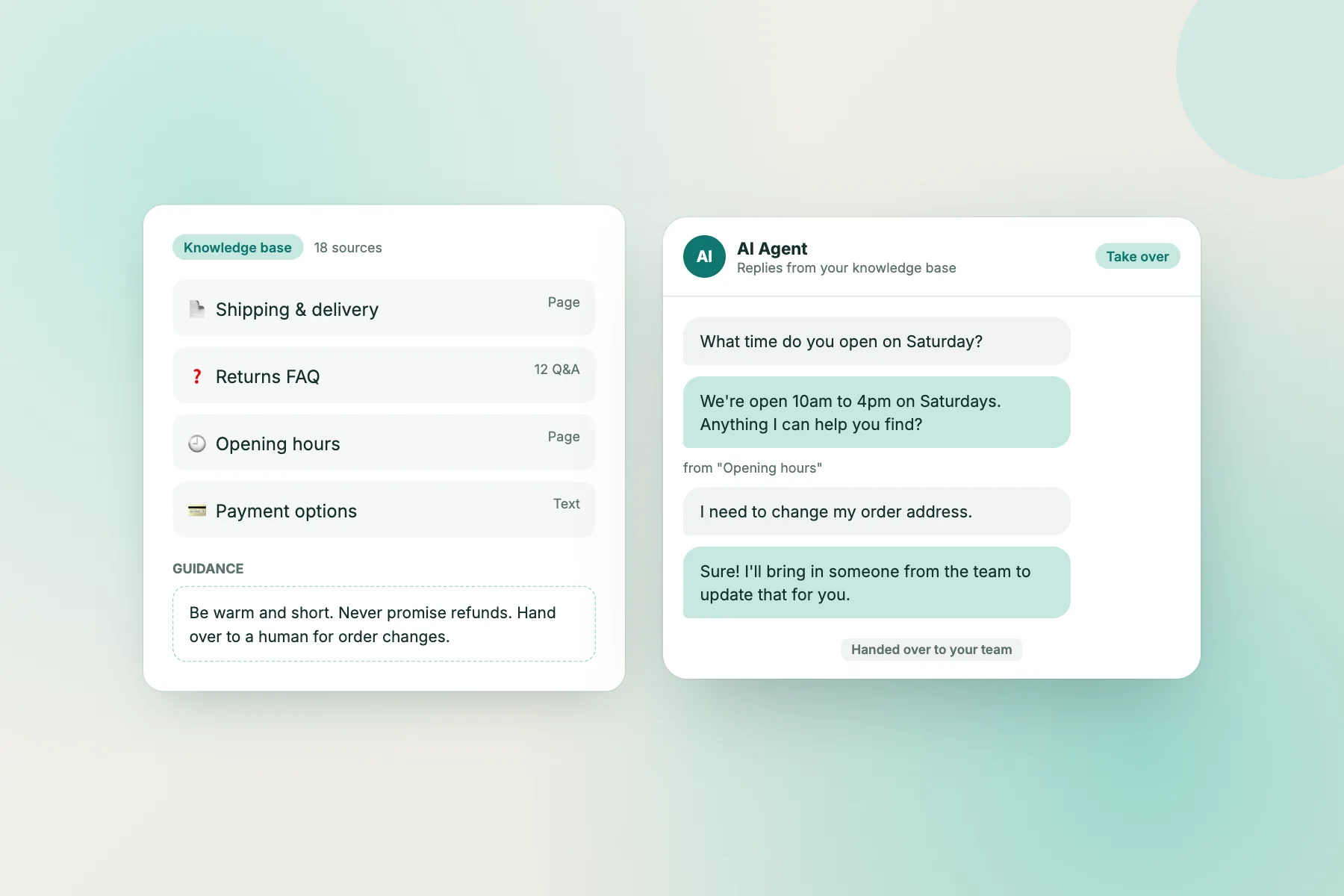
LiveChatBot’s free plan includes a chat widget, an AI Agent that answers from the knowledge you give it, a free keyword bot that uses your saved replies, Flows, tickets and an Android app for your team, for two websites with 100 visitors per website each month. AI replies come with a small free monthly allowance. Start on livechatbot.in, or read our simpler guide to the AI bot meaning and the six types of business bots.
Frequently asked questions
What is the basic AI bots meaning?
AI bots are automated programs that use artificial intelligence to decide what to do, such as understanding questions, writing replies or making predictions.
Are all bots bad?
No. Chat assistants and search crawlers are helpful, and many social media bots are labelled and useful. Spam, scam and scalper bots are the harmful kinds.
How can I tell if I’m talking to a bot?
Ask. A well-designed business assistant will tell you. Undisclosed bots often show repetitive language, instant replies at all hours, urgency, or requests for codes or money.
Do bots visit my website?
Yes. Search crawlers index it, and spam bots may target forms and chats. A chat assistant is the one you add on purpose to help visitors.
Are trading bots safe?
They’re tools used by professionals, but advertisements promising guaranteed profits from trading bots are a common scam. Be very cautious.
Keep reading
Related guides
AI Bot Meaning, Explained With 6 Everyday Analogies (and Where Each One Breaks Down)
AI Bot Free Trial Plan: How to Test a Free Bot for 14 Days and Know Whether to Keep It
AI Based Chatbot Knowledge Audit: Which of Your Pages and Documents to Feed It, and How to Fix Them First
Add the helpful kind to your website
An honest, well-informed chat assistant, free on livechatbot.in.