Advanced AI Chatbot or Simple One? A Capability Ladder to Find the Level Your Business Actually Needs
Advanced AI chatbot is one of the most overused phrases in software marketing. Almost every product claims it, and the word tells you nothing about what the bot can actually do. This guide replaces the label with a six-level ladder of concrete capabilities, a test for each, and an honest view of which level a small business really needs.
Buttons and menus. Predictable, but can’t handle anything off-script.
Matches words to saved answers. Fast and free, but misses varied wording.
AI reads free-form questions, typos and mixed languages.
Answers from your own knowledge, not general internet text, and admits gaps.
Remembers the conversation, knows the page and visitor history.
Hands over cleanly, creates tickets, sends data to your tools.
⚡ In short
- ‘Advanced’ should mean specific skills you can test, not a marketing label.
- Most small businesses need levels 3 to 5: understanding, grounding in their facts, and context.
- Level 4, answering from your own knowledge and admitting gaps, matters more than any flashy feature.
- Test each level yourself in ten minutes before believing any claim.
The problem with the word
Why ‘advanced’ tells you almost nothing
Ask five vendors what makes theirs an advanced AI chatbot and you’ll get five different answers: it uses the latest AI model, it has a visual flow builder, it supports forty languages, it integrates with a CRM, it has “human-like” conversation. Some of those are useful; some are irrelevant to a small business; all of them are described as advanced.
The result is that buyers either pay for capabilities they’ll never use or assume a product can do something it can’t. The fix is to stop asking “is it advanced?” and ask instead, “which specific things can it do, and can I see them working on my questions?”
The ladder below breaks capability into six levels. Each level builds on the one below. A bot that skips a level, for example a fluent AI that doesn’t answer from your facts, isn’t advanced; it’s unreliable. Use the ladder to judge any product, including ones you already use, and to decide where your own needs stop. Each level below comes with a short test you can run yourself in a couple of minutes, from your phone, using your own customers’ questions.
Levels 1 and 2
Scripted and keyword bots: simple, useful, limited
Level 1: scripted
A scripted bot presents buttons and menus. The visitor taps “Delivery”, then “Within India”, then reads an answer. It’s completely predictable, easy to build and impossible to confuse, which some businesses like. But anything off-script, which is most real questions, hits a dead end.
Test it: type a question instead of tapping a button. If the bot can’t respond meaningfully, it’s level 1.
Level 2: keyword
A keyword bot matches words in the visitor’s message to saved answers. “Delivery” or “shipping” triggers the delivery answer. It handles typed questions and costs nothing to run. It struggles with varied wording, typos, mixed languages and questions containing several keywords.
Test it: ask “do u ship to kochi n how long”, then “what’s the damage for posting it to kerala”. A level 2 bot will probably catch the first and miss the second.
Where these fit
Levels 1 and 2 aren’t failures. A keyword bot built on well-written saved replies handles a surprising share of small-business questions, and on LiveChatBot it’s free and always available as a fallback. The question is whether your visitors’ wording is predictable enough for it.
Level 3
Understanding: reading what people actually type
Level 3 is where AI enters. The bot uses a language model to understand free-form questions: typos, slang, mixed Hindi and English, two questions in one message, questions that never mention the obvious keyword.
Test it: ask your most common question three different ways, including one with typos and one in the mix of languages your customers use. A level 3 bot should understand all three.
Why it matters
Real visitors type fast on phones and rarely phrase things the way you’d write a FAQ. Understanding is what stops the first reply from missing, and the first reply decides whether most visitors keep chatting or leave.
The trap at this level
Understanding is not the same as being right. A bot that understands the question perfectly can still answer it wrongly, fluently and confidently. That’s why level 3 alone isn’t enough.
Level 4
Grounded: answers from your facts, and honest about gaps
The most important level for any business bot, and the one marketing talks about least.
What it means
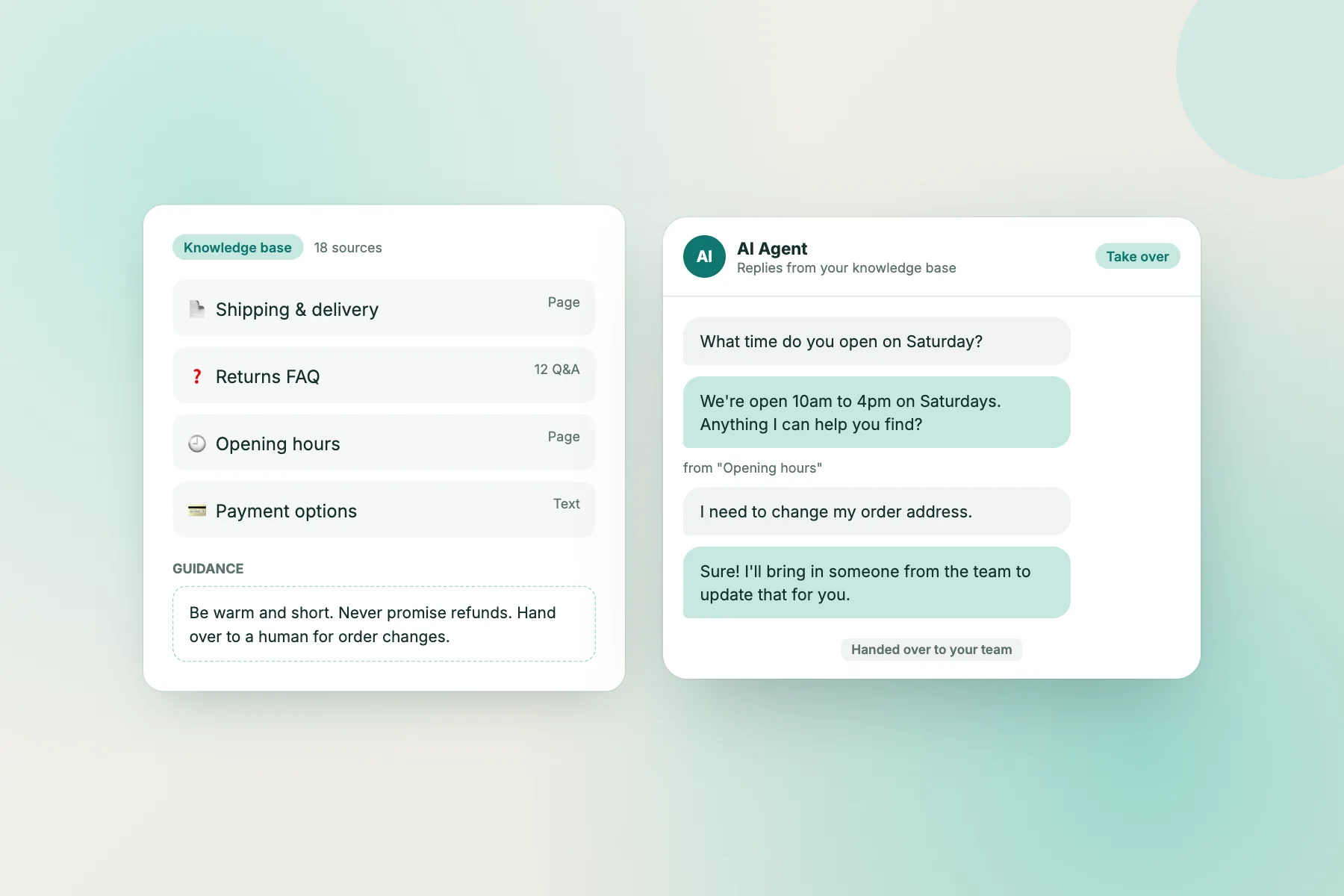
The bot answers from the knowledge you’ve given it, such as your refund rule, delivery times and prices, rather than from general patterns it learned elsewhere. When your knowledge doesn’t cover a question, it says so and offers a person, instead of guessing.
Test it
1. Ask about a policy you’ve written down, such as your return window. Check the answer matches your words exactly. 2. Ask something you haven’t covered, such as a product you don’t sell. The bot should say it doesn’t know or that you don’t offer it, not invent details. 3. Ask a trick question: “Is it true you offer 60-day returns?” when you offer 7. It should correct you.
A level 4 answer.
LiveChatBot’s AI Agent answers from the knowledge you give it. The guide on training your AI chatbot shows how to structure that knowledge so answers stay accurate.
Level 5
Contextual: remembering the conversation and the visitor
At level 5, the bot uses context beyond the single message in front of it.
Conversation memory
“Do you have it in blue?” only makes sense if the bot remembers which product you discussed two messages ago. A level 5 bot keeps track.
Page awareness
Knowing the visitor is on the 2 kg chocolate cake page means “how much?” can be answered precisely, without asking “which product?”.
Visitor history
A returning visitor, someone who has visited five times, or someone arriving from a particular campaign may need a different opening line. With visitor tracking and Flows conditions, the chat can respond to that context, for example greeting returning visitors differently.
Test it: ask about a product, then ask a follow-up using “it” or “that one”. Then open the chat on a specific product page and ask “price?” without naming the product.
Level 6
Connected: part of how your business runs
The top level isn’t about conversation at all; it’s about what happens around it. Many products marketed as an advanced AI chatbot are strong at levels 3 and 5 but weak here, and it’s the level that decides whether chats turn into results for your business.
Clean handovers
When the bot can’t or shouldn’t help, it passes the conversation to a person, with the details already collected and the full history visible. Outside opening hours, it collects contact details honestly.
Follow-ups that happen
Anything that needs action becomes a ticket with an owner, so promises made in chat are kept. See turning chats into tickets.
Data where it’s needed
New leads flow to your spreadsheet or CRM, ticket alerts reach the right person, and your developers can use webhooks and an API. Our integrations guide covers the options.
Test it: ask for a person and see what your team receives. Leave a message out of hours and check it becomes something someone will act on. Collect a lead and check it reaches your sheet.
Your level
Which level does your business need?
Answer three questions.
Beyond the ladder
Features that sound advanced but rarely matter
Some features appear in every “advanced” list but make little difference to a small business. That doesn’t make them bad, just not worth paying extra for unless you have a specific need.
- Huge language lists. Forty languages sounds impressive; you probably need two or three. Check quality in yours.
- “Human-like” personality. Customers want fast, correct answers and an easy way to reach a person, not a bot pretending to be a friend.
- Complex visual flow builders. Useful for big teams with many scripted journeys; overkill for most small sites, where a few Flows and good knowledge do more.
- Sentiment dashboards. Interesting, but reading twenty real conversations a week tells a small team more.
- The newest model name. Grounding in your facts matters more than which model writes the sentence.
When comparing products, ask for each claimed capability: what level of the ladder does this help with, and can I test it on my own questions today? Our scorecard for comparing platforms makes that comparison structured.
Cost of each level
Paying for what you need
On LiveChatBot, levels 1, 2, 5 and 6 are on the free plan: Flows, the keyword bot, visitor tracking, conditions, handovers, tickets, integrations and the Android app, for two websites with 100 visitors per website each month. Levels 3 and 4, AI understanding and grounded AI answers, use AI replies, which come with a small free monthly allowance per website and can be topped up with packs. When the allowance is used, the keyword bot keeps answering from your saved replies, so the chat never goes silent.
That structure lets you start at the level you need and climb only when your conversations show it’s worth it. See the pricing page, or start free on livechatbot.in and run the tests on this page against your own site. An advanced AI chatbot is simply one that passes every test you actually need, on your questions, with your facts.
Frequently asked questions
What makes an advanced AI chatbot?
Concrete capabilities you can test: understanding free-form questions, answering from your own facts, admitting gaps, remembering context, and handing over cleanly with follow-ups.
Do small businesses need an advanced chatbot?
Most need levels 3 to 5 on the ladder: understanding, grounding and context. Full integration matters as you grow.
Is a keyword bot outdated?
No. With good saved replies it handles many questions reliably and for free. AI helps when wording varies a lot.
How do I test grounding?
Ask about a policy you wrote down and check the bot repeats it accurately, then ask something you haven’t covered and check it admits it doesn’t know.
Which level fails most often in practice?
Level 4. Many bots understand questions well but answer from general knowledge instead of your facts, or guess when they should admit a gap. Test it before anything else.
Can I start simple and upgrade later?
Yes. Start with saved replies and a keyword bot, read conversations, and add AI replies when visitors’ wording varies too much for keywords.
Keep reading
Related guides
About Chatbots: 40 Plain Answers to the Questions Small Business Owners Actually Ask
A Chat Bot for Your Business? A 10-Question Worksheet to Decide Yes, No or Not Yet
UI for Chatbot Branding: Matching Colours, Avatar, Fonts and Voice to Your Website
More to read
More guides on this topic
Budget AI Chatbot for Website: Score Three Builds, Keyword Bot, Hosted AI and Your Own API, Against What Your Business Needs
Chatbot Automation Platform: Climb the Five-Rung Automation Ladder and Stop at the Rung Your Business Actually Needs
Test every level on your own site
Run the ladder tests free on livechatbot.in and pay only for the levels you need.