A Chat Bot for Your Business? A 10-Question Worksheet to Decide Yes, No or Not Yet
A chat bot is not right for every business, and the honest answer to “do I need one?” is sometimes “not yet”. This worksheet asks ten questions about your messages, your team, your hours and your customers. Your answers point to one of three outcomes, each with a clear next step, so you decide based on your business rather than on hype.
⚡ In short
- A bot pays off when the same questions repeat, answers are stable, and people message when you can’t reply.
- If your enquiries are few, complex or very personal, live chat with people may suit you better.
- ‘Not yet’ is a common, sensible answer: start with live chat and saved replies, then add a bot later.
- Whatever you decide, write down your top 10 questions. It helps in every scenario.
How to use this
Fifteen minutes, a notepad and your last month of messages
This worksheet works best with evidence rather than gut feeling. Before you start, open your email, WhatsApp, phone notes and any contact form submissions from the last month. You’ll refer to them while answering.
For each question below, note your answer and the letter it points to: Y (towards yes), N (towards no), or L (towards not yet, or “later”). At the end, count your letters. The most common letter is your outcome, and there’s a section further down for each.
Don’t worry if your answers are mixed. Most businesses have some reasons for and some against, and the mix itself tells you something. A business with lots of Y answers about repeat questions but N answers about team time, for example, might start with a very simple bot that only answers three questions. The aim isn’t a perfect score; it’s a clear, honest picture of whether a bot would help you right now.
Part 1 · Your messages
Questions 1–4: what customers ask
The strongest signal is the shape of the questions you receive.
1
Do the same questions repeat?
Look at last month. If 5–10 questions make up most messages, mark Y. If almost every message is different, mark N.
2
Are the answers stable?
Hours, prices, delivery rules and processes that rarely change: Y. Answers that depend on today’s stock or a person’s judgement: N.
3
Could a wrong answer cause harm?
Low stakes (opening hours, sizes): Y. Medical, legal or financial advice dominates: N.
4
How many enquiries do you get?
Several a day or more: Y. A handful a week: L, since a person can easily handle that.
Part 2 · Your team
Questions 5–7: who answers today
A bot changes your team’s work. Be honest about time and attention.
1
Are messages answered quickly today?
Often slow or missed: Y. Always answered within minutes: L; a bot may still help, but there’s no urgent problem.
2
Can someone spend 20 minutes a week on it?
Yes, someone can read chats and fix answers: Y. Nobody has any time at all: L; start smaller.
3
Will someone own the answers?
A named person will keep facts current: Y. Nobody wants to: N, as an unowned bot goes stale and misleads customers.
Part 3 · Your customers
Questions 8–10: when and how they reach you
1
Do people message outside your hours?
Evenings, nights, weekends are common: Y. Nearly all messages arrive during opening hours: L.
2
Do visitors prefer not to call or share a number?
Many browse and leave without contacting you: Y. Most customers phone or visit in person anyway: N.
3
Do customers expect a personal touch?
Quick facts are what they want first: Y. Every enquiry is a relationship, such as high-end services or sensitive work: N or L.
Your score
Count your letters
Tick the outcome that matches your most common letter.
If it’s yes
The ‘yes’ plan: a focused bot in one week
If your answers point to yes, don’t try to automate everything at once. Start small and specific, and let real conversations guide what you add.
Day 1–2: write your top ten
From the messages you just reviewed, write the ten most common questions and your best answer to each, with the specific number, date or link a customer needs.
Day 3: set up
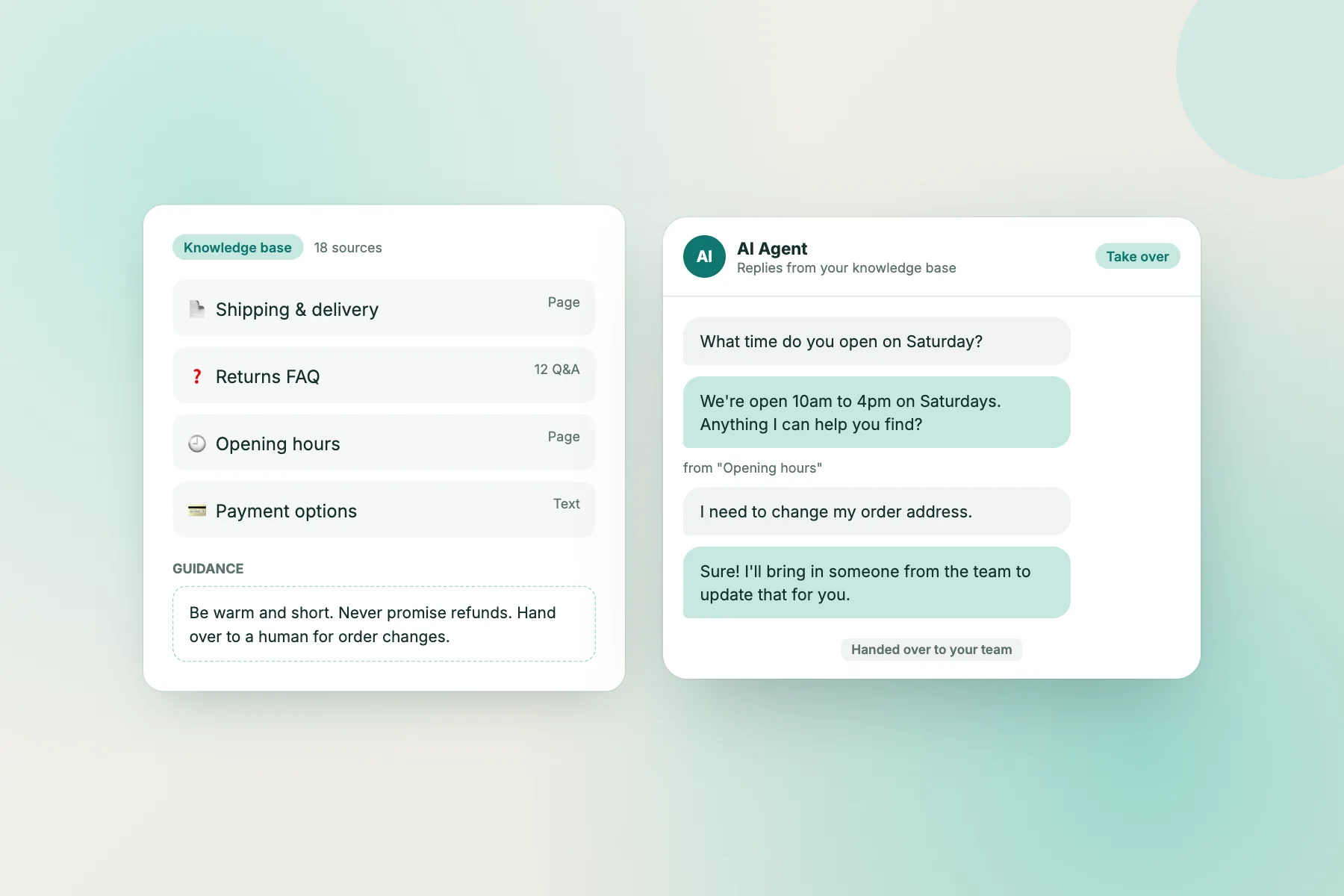
Sign up on livechatbot.in, add the widget to your site, and add your answers as saved replies and knowledge for the AI Agent. The free keyword bot can answer from saved replies; AI replies come with a small free monthly allowance per website.
Day 4: rules for people
Decide which topics always go to a person (complaints, refunds, anything sensitive) and set your opening hours so out-of-hours visitors leave a message.
Day 5: test
Ask your ten questions from your phone, the way customers type, with typos. Fix anything wrong.
Days 6–7: go live and read
Switch it on and read every conversation for the first week. Add answers for anything new. The 30-day launch plan covers the following weeks.
If it’s not yet
The ‘not yet’ plan: live chat first, bot later
‘Not yet’ is a perfectly good answer, and often the smartest. It usually means website chat would help, but your volume, your team’s time, or the variety of your questions makes a full bot premature.
Start with live chat
Add a chat widget so visitors can reach you without calling. You and your team answer by hand, from the dashboard or the Android app. This alone often brings in enquiries from visitors who’d never have phoned.
Build saved replies as you go
Every time you type the same answer twice, save it. After a month or two, you’ll have a library of answers, which is exactly what a bot needs later. See how to use saved replies.
Set honest hours
Opening hours and an away message mean visitors outside your hours leave a number instead of waiting.
Revisit in three months
Run this worksheet again with three months of chat history. If questions now repeat and volume has grown, switching on the bot is a small step: your saved replies are already written.
If it’s no
The ‘no’ plan: small steps that still help
If your answers point to no, a chatbot probably isn’t worth it right now. That’s common for businesses with a small number of high-value, personal enquiries: architects, specialist consultants, luxury services, some medical practices.
You can still make life easier for visitors and yourself:
- A clear contact page with your phone number, email, hours and a realistic reply time.
- A short FAQ page answering the three or four things people ask before contacting you. It filters out unsuitable enquiries.
- An online booking link if you take appointments, so people can book without a back-and-forth.
- A simple live chat only during hours when someone is available, if visitors seem to want it. It’s not a bot; it’s just you, reachable.
And keep your list of common questions. Businesses change: if enquiries grow, you’ll be ready to revisit the decision.
Real-world patterns
How different businesses usually score
It can help to see how businesses like yours tend to come out. These are general patterns, not rules; your own answers matter more.
Online shops
Usually yes. Questions about delivery, returns, sizes and payment repeat constantly, the answers are stable, and many shoppers browse at night. A focused bot often pays off within weeks.
Clinics and salons
Often yes for the basics, people for the rest. Timings, fees, location and booking questions suit a bot; anything about symptoms or treatments should go straight to a person.
Coaching institutes and schools
Usually yes or not yet. Fees, batches and timings repeat heavily during admission season; outside it, enquiries may be few enough for live chat alone.
Consultants, architects and specialists
Often no or not yet. Enquiries are fewer, more complex and more personal. A clear contact page and live chat during working hours may be all they need.
Software and online services
Usually yes. Questions about plans, features and setup repeat, and visitors arrive from many time zones. A bot answering from documentation, with handover for account issues, works well.
Cost of waiting
What happens if you decide ‘no’ when the answer is ‘yes’
Deciding against a bot is fine when it’s the right call. But it’s worth knowing what a wrong ‘no’ usually costs, so you can spot it later.
- Missed evening enquiries. Visitors who couldn’t get an answer at night often buy elsewhere before you reply.
- Repeated typing. The same answers typed by hand dozens of times a week, time that could go to customers who need you.
- Slow replies at busy times. When everyone asks at once, such as during a sale or admissions, simple questions queue behind complex ones.
If you notice these after deciding no, run the worksheet again. A chat bot that only answers your five most common questions might be enough to fix them.
Myths
Three reasons people say yes or no for the wrong reasons
Some decisions about bots are driven by assumptions rather than evidence. Watch out for these.
“Everyone has one, so I need one”
Competitors’ bots don’t tell you whether customers use them or like them. Decide based on your own messages, not on what other websites show.
“A bot will replace a person”
For small businesses, bots take the repeat questions so people can focus on the rest. If you’re hoping to remove all human contact, customers will feel it, and many will leave.
“Bots are too expensive or technical”
Not any more. A small business can start with a free plan and a copy-paste install. The real cost is a few hours of writing answers and twenty minutes a week of upkeep. Whether a chat bot is right for you depends on your messages and your time, not on budget.
Frequently asked questions
How do I know if my business needs a chat bot?
If the same questions repeat, the answers are stable, and people message when you can’t reply quickly, a bot will likely save time. This worksheet helps you check.
Is a chat bot the same as live chat?
No. Live chat connects visitors with people; a bot answers automatically. Many businesses use both in one chat window. See chatbot vs live chat for more.
What if I’m not sure after the worksheet?
Start with live chat and saved replies. It’s low risk, and after a few months your chat history will make the decision obvious.
Will customers mind talking to a bot?
Most don’t, as long as the bot answers quickly and correctly, says it’s a bot, and makes it easy to reach a person when needed.
Can I try one without committing?
Yes. LiveChatBot’s free plan lets you add chat and a keyword bot to your site with no card. You can switch the bot off at any time.
How long does it take to set up?
About a week for a focused setup, most of it writing answers and testing. The technical install takes minutes.
Keep reading
Related guides
UI for Chatbot Branding: Matching Colours, Avatar, Fonts and Voice to Your Website
Online Talk Website Safety: How to Choose One, Red Flags to Avoid, and Rules for Talking to Strangers
Whatever your answer, start with your top ten questions
Write them down today. If the answer is yes or not yet, set up chat free on livechatbot.in.