Web Chatroom Safety for Members and Moderators: Room Rules, Scam Patterns and a Free Oversharing Screener
Web chatroom conversations happen in public: everything you type can be read, copied and screenshotted by people you have never met. That’s what makes rooms fun for hobby groups, study circles and fan communities, and it’s also why they attract scammers and people looking for personal details. This guide is for both sides of a room: members who want to join in without oversharing, and the volunteers or small organisations who run a room and have to keep it safe. It ends with a screener that checks your messages for numbers, IDs, links and scam phrases before you post.
⚡ In short
- A public room is a crowd, not a conversation. Assume every message is screenshotted.
- Never post numbers that identify you: phone, Aadhaar, PAN, UPI ID, OTP, card or address.
- The common scams in rooms follow a pattern: easy money, a fee, then a move to a private app.
- Moderators need pinned rules, a report path, a rota and a written plan for incidents.
- A business answering customers usually needs a private one-to-one chat, not a public room.
Room or chat?
Two very different things share the word ‘chat’
A chatroom is a shared space. Many people type into the same stream, and everyone in the room sees every message. Think of a study group, a cricket fan room, a coding help channel or an alumni group on a community platform. The value comes from the crowd: someone you have never met answers your question.
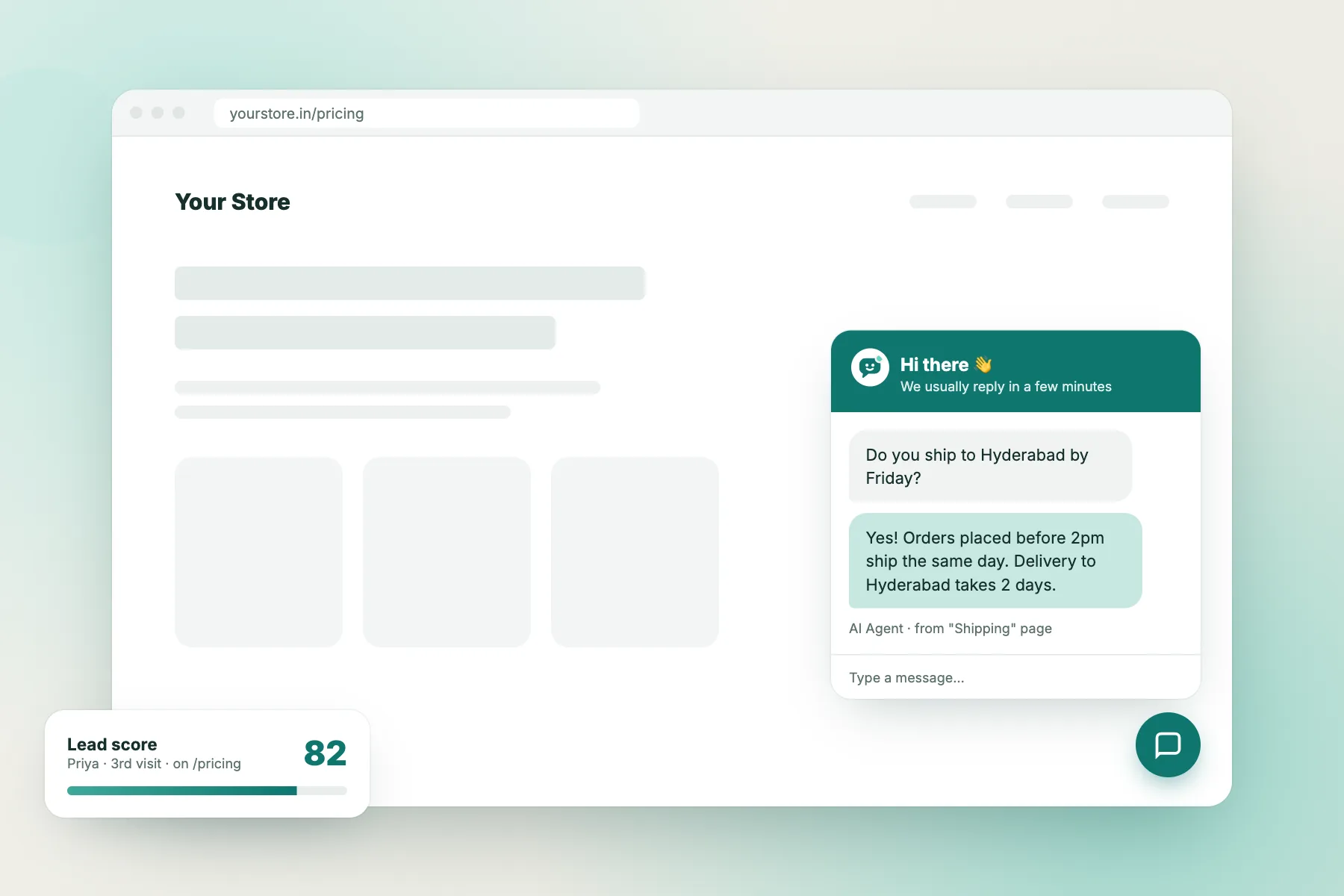
Website live chat is the opposite. When a visitor opens the chat bubble on a business website, they talk privately with that business’s team or bot. Nobody else on the site can see the conversation. That’s how LiveChatBot works: every chat is one visitor and one business, with an inbox the team answers from. It isn’t a group room, and it has no public channel.
Why does this matter? Because the safety rules are different. In a one-to-one business chat, sharing your phone number so the shop can call you back is normal and sensible, provided you started the chat on the real website. In a public room, the same number is visible to everyone, including people who joined only to collect numbers.
If you run a business and you are wondering whether to open a community room for customers, read the “Should a business run a room?” section near the end first. For most small businesses, private chat answers customers better and carries far less moderation work. For everyone else, members and moderators alike, the rest of this guide is about staying safe in the room itself.
What people overshare
Six details that cause most of the trouble
Each one seems harmless on its own. Together, they let a stranger find, impersonate or pressure you.
Phone and WhatsApp number
The most common overshare. It brings spam, fake job offers and, at worst, harassment that moves off the platform where moderators can’t help.
UPI ID and payment details
A UPI ID often shows your real name and bank app. Strangers can send fake collect requests that look like refunds.
OTPs and passwords
No genuine person ever needs these. ‘Can you check if this code works?’ is a takeover attempt, not a favour.
Identity numbers
Aadhaar, PAN and card numbers can be misused for loans, SIM swaps and fraud. They have no place in any chat.
Age, school and city
Each fact narrows the search. A teenager’s age plus school plus area is enough for an adult stranger to find them.
Live location and routine
“Leaving for the gym at 6” or “home alone this weekend” tells strangers where you’ll be, and when your home will be empty.
Free tool
Screen your messages before you post
Paste one or more messages. The screener flags personal numbers, IDs, links, money requests and off-platform moves, and suggests a safer version.
Runs only in your browser; nothing is sent or saved. It looks for patterns (numbers, IDs, links, money and off-platform requests), so it can miss things and can flag harmless lines. Use it as a second pair of eyes, not a guarantee.
For members
How to join in without giving yourself away
You don’t need to be anonymous to be safe in a web chatroom. You need to be deliberate about what you share and where.
Use a room name, not your full name
A first name or nickname is enough. Avoid usernames that combine your name and birth year, like priya2009. They give away your age in every message.
Keep contact details for private, trusted channels
If someone helpful offers to share notes, ask them to post the notes in the room. If you must swap contacts, use an email address you created for communities, not your main email or phone number.
Treat “move to WhatsApp” as a signal
Some people move off a moderated room to continue a good conversation. Scammers do it to get away from moderators. If a new contact pushes for a private app within minutes, slow down.
Don’t click unfamiliar short links
Shortened links hide the real address. If a link matters, ask what it is and where it goes, or search for the site yourself.
Screenshot before you block
If someone threatens you, asks for money or sends something inappropriate, take screenshots showing their username and the time, then report and block. Blocking first can make the evidence harder to find later.
Know where to report
Use the room’s report button first. For fraud, threats or anything involving a child, you can also report on India’s National Cyber Crime Reporting Portal at cybercrime.gov.in, or call the 1930 helpline for financial fraud as quickly as possible, ideally within hours.
Scam patterns
How the common room scams unfold, step by step
The details change; the shape stays the same. Spotting the step you are on is the best defence.
A new member is unusually helpful or flattering, or posts an exciting offer: part-time work, trading tips, a free course.
“DM me”, “join my Telegram”, “WhatsApp me for details”. Away from moderators, nobody can warn you.
A task that pays ₹100, or a tip that ‘works’. It builds trust and makes the next step feel safe.
A registration fee, a bigger deposit, an OTP ‘to verify’, or a personal photo or document.
Deadlines, guilt or threats. This is the point to stop, keep the evidence and report.
For moderators
Setting up a room that stays safe
Running a web chatroom for your society, coaching batch, club or community is real work. The rooms that stay pleasant share a few simple habits that you can put in place before the room grows.
Write five rules and pin them
Long rulebooks don’t get read. Five short rules, pinned at the top, do. The ones in the hero of this page are a good start: no personal details, no OTP or payment requests, no money offers, be kind, and how to report.
Slow down new members
Many community platforms let you limit what new members can do: wait a few minutes before posting, no links for the first day, or a slow mode that allows one message every few seconds. These settings stop most spam bots without bothering real people.
Restrict links and attachments
Allow links only from trusted roles, or only after a member has been around for a while. Most scam rooms are filled with links, so this single setting removes a lot of trouble.
Have more than one moderator
One person cannot watch a room all day. Make a simple rota, even two people covering mornings and evenings, and agree who decides on bans.
Make reporting easy and visible
Members should know exactly how to report: a button, a moderator name, or a separate contact. Reply to every report, even if only to say you have looked at it.
Keep a short log
Write down what happened, what you did and when. A shared document is enough. If a problem repeats or ends up with the police, a dated log is far more useful than memory.
Copy-ready
Messages moderators can paste
Short, calm and consistent. Edit the names and timings to fit your room.
Young members
Extra care when teenagers are in the room
Study and gaming rooms often include teenagers, even when the platform’s minimum age says otherwise. Moderators and parents can do a lot without making the room feel like a classroom.
For moderators: remove posts that share a young member’s age with their school or area, and say why, kindly. Watch for adults who single out younger members, offer gifts or recharges, or push for private chat or video calls. Act on that pattern early; you don’t need proof of bad intent to mute and review.
For parents: ask which rooms your child uses, and talk through the six details above rather than banning everything. Agree on one rule above all others: if anyone asks for photos, secrets or money, or makes them uncomfortable, they can tell you without getting into trouble. Fear of losing the phone is one reason young people stay quiet.
For teenagers themselves: a real friend from a room will be fine with you keeping your number private. Anyone who gets angry about it is showing you exactly why you should.
Room safety check
Ten minutes for moderators, once a month
Tick each item. Your ticks stay in this browser tab only.
Should a business run a room?
When a private chat serves customers better
Some businesses wonder whether to open a web chatroom for their customers. Occasionally it’s a good idea: a coaching institute running a supervised doubt-solving room for one batch, a software product with an active user community, or a hobby shop whose customers love talking to each other.
For most small businesses, though, customers don’t want to ask about their order, a refund or a price in front of strangers, and you don’t want to moderate a public room on top of running the business. A private one-to-one chat on your website fits better. Each customer talks only to your team or bot, can share their phone number safely, and nobody else sees it.
That’s the kind of chat LiveChatBot provides: a chat widget on your website, a shared inbox for your team, an Android app for replies on the go, and tools for difficult visitors, such as blocking a visitor or IP address. Our guide to keeping live chats free of spam and abuse covers the business side of safety, and what live chat is explains the basics if you’re new to it.
If you run classes, see live chat for education for how institutes answer parents and students privately while keeping any group rooms separate and supervised. The free plan covers two websites with 100 visitors per website each month. Start on livechatbot.in.
Frequently asked questions
Is a web chatroom safe to use?
It can be, if the room is moderated and you never post personal details. Treat every message as public and permanent, and leave rooms where scams and harassment go unchecked.
What should I never share in a chatroom?
Phone number, email, UPI ID, OTPs, passwords, Aadhaar, PAN or card numbers, your address, and your age together with your school or area.
Someone in a room asked me for money. What now?
Don’t pay or share any code. Take screenshots, report the member in the room, and report fraud at cybercrime.gov.in or call 1930.
How many moderators does a room need?
At least two, with a simple rota, so somebody can respond to reports in the morning and the evening. Larger or busier rooms need more.
Is website live chat the same as a chatroom?
No. Website live chat is a private conversation between one visitor and one business. Nobody else can see it, so sharing a callback number there is normal.
Private chat for your customers, not a public room
Answer every visitor one-to-one, block trouble-makers and reply from your phone. Start free on livechatbot.in.