Types of Keywords in SEO: Search Intent Types, and the Business Types That Actually Bring Leads
Types of keywords in SEO are usually explained by what the searcher wants: to learn, to find a site, to compare or to buy. That is useful for writing, but it does not tell a small business which keywords pay. This guide covers the classic types first, then a second way to sort keywords by what they do for you: bring leads, bring traffic, or bring nothing yet.
⚡ In short
- Classic types describe the search: informational, navigational, commercial and transactional intent; short-tail and long-tail; branded and local.
- Business types describe the result on your site: money, action, rising, traffic, sleeping, waiting and missing.
- Use classic types to decide how to write a page, and business types to decide which page to write next.
- Missing keywords, questions visitors ask that no page answers, are often the easiest wins.
Part 1
The classic keyword types, by search intent
Search intent is the reason behind a search. Google tries to show pages that match it, so your page should match it too.
Informational
The searcher wants to learn: “how to drape a saree”, “what is a CRM”. These bring readers early in their journey. Write clear guides, answer the question in the first lines, and link to the page where you sell.
Navigational
The searcher wants a specific site or brand: “livechatbot login”, “Ravi Sarees Chennai”. You only rank for your own name, so make sure your brand pages are clear and fast.
Commercial
The searcher is comparing before buying: “best live chat for small business”, “kanjivaram vs banarasi”. These deserve comparison pages with honest pros and cons.
Transactional
The searcher is ready to act: “buy red bridal saree online”, “book dental check-up near me”. These pages need price, availability and a very easy way to contact you.
Part 2
Other ways to group keywords
Short-tail and long-tail
Short-tail keywords are one or two words (“sarees”); long-tail keywords are longer and more specific (“red kanjivaram bridal saree with blouse”). Long-tail searches are fewer but much more likely to turn into a sale, and small sites can rank for them.
Branded and non-branded
Branded keywords include your name; non-branded do not. Non-branded keywords are how new customers find you.
Local
Local keywords include a place or “near me”. For shops, clinics and service businesses they are often the most valuable, because the searcher can actually visit.
Seasonal
Some keywords rise every year around festivals, exams or weather. Plan pages a few weeks ahead so Google has read them before the season starts.
The gap
Why classic types are not enough for a small business
All the types above describe the search. None of them tells you what happened after the visitor arrived. A transactional keyword can bring visitors who leave in five seconds; an informational one can quietly bring your best leads because readers come back later and ask for a quote.
For a business with limited time, the useful question is: which keywords bring people who contact me? That needs data from your own website: which page each visitor landed on, whether they chatted, clicked WhatsApp, called or filled a form, and whether they left their details. That is what the business types below are built from.
Think of it as two layers. The first layer, the classic types of keywords in SEO, helps you write a page that matches what the searcher wants. The second layer tells you whether that page is doing its job for your business. You need both: a page can match intent perfectly and still bring no enquiries if the offer, the price or the way to contact you is unclear.
A quick example
A tuition centre writes a guide for “how to prepare for class 10 maths board exam”. It is informational, so by the classic view it is a reading page, not a selling page. But the business view shows that parents who land on it often open the fees page and chat about weekend batches. It is a money keyword, and the centre writes two more guides on the same topic, each linking to the batch page.
Part 3
Seven business types of keywords, by what they do for you
These types come from the seo cycle report in LiveChatBot, which uses each page’s address (slug) as its target keyword and follows the page from published to lead.
- Money: the page brings leads. Build more pages around this topic.
- Action: visitors click WhatsApp, call, fill a form or chat, but no lead yet. Improve the follow-up.
- Rising: visits are growing fast. Strengthen the page before the wave passes.
- Traffic: many visitors, few actions. Add a clear reason and a way to contact you.
- Sleeping: the page is published but gets almost no visitors.
- Waiting: the page is new and Google may not have read it yet.
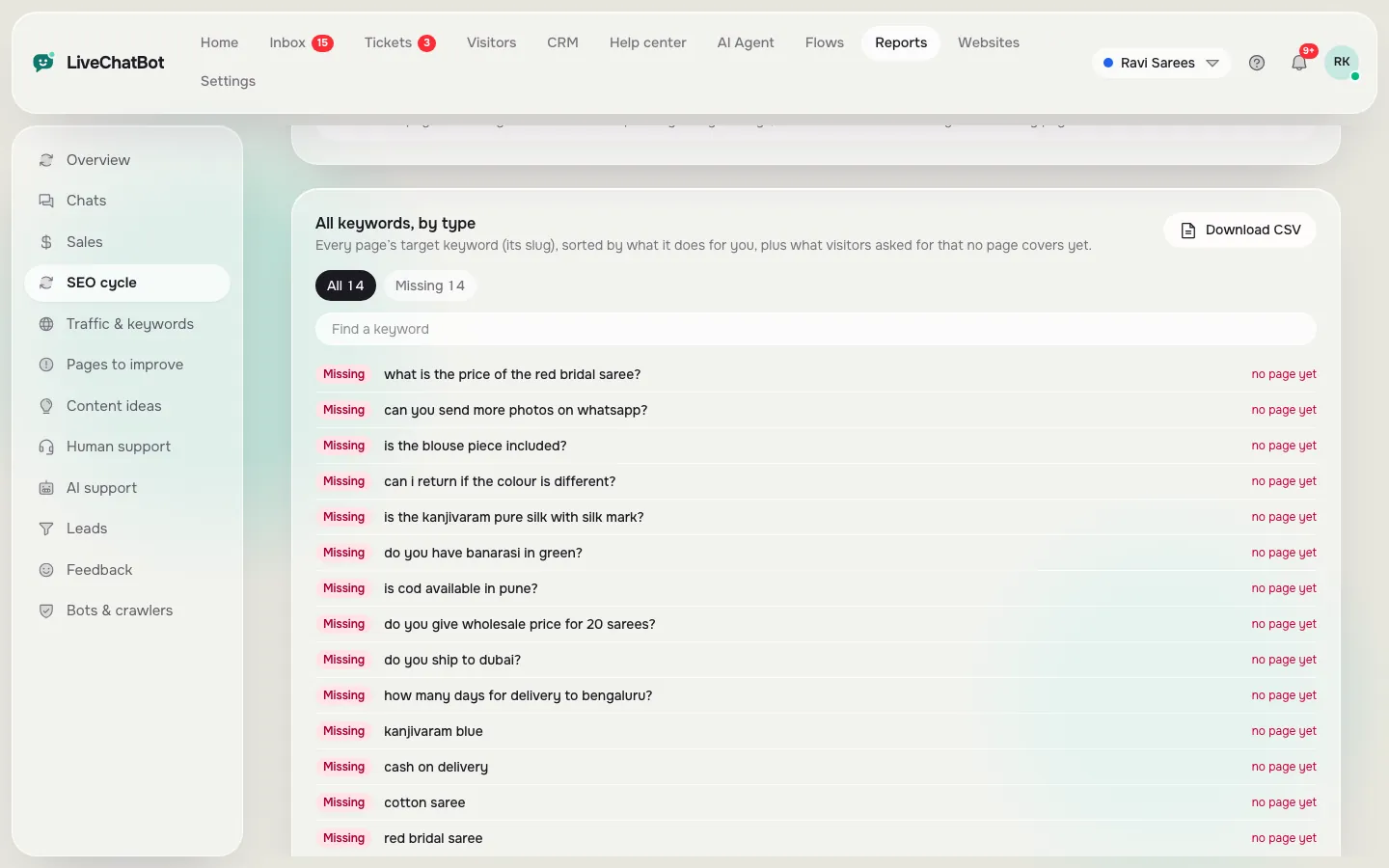
- Missing: visitors searched your site or asked in chat, and no page answers it.
What to do
What to do with each type
Money keywords: write around them
A money keyword with only one page is the quickest win. Write two or three supporting posts on closely related questions and link them to the earning page. Read how to find money keywords and how to write supporting blog posts.
Action keywords: fix the follow-up
People are reaching out but not becoming leads. Check how fast you reply, and make your away form ask for an email and phone number so no enquiry is lost.
Traffic keywords: improve the page
Visitors arrive and leave. Put the price, answer or offer in the first screen, add a chat greeting and an FAQ. Landing page optimization lists the pages losing the most visitors.
Rising keywords: move fast
Update the page, add a section on what people are now asking, and link to it from your home page while interest is high.
Sleeping and waiting keywords: help Google find them
Link to them from pages that already get visitors, and check they are in your sitemap. See how long does it take google to index a new page.
Missing keywords: write the page
These are real questions from real visitors, in their own words. They make the best new pages because you already know someone wants the answer.
Finding them
Where missing keywords come from
Google hides most of the words people type, so missing keywords come from what you can see on your own site: searches in your website’s search box, the questions visitors type into chat, and words from your ad campaign links.
LiveChatBot lists them in the SEO cycle table and turns the best ones into ideas in Content ideas, with the reason each idea was suggested. See blog ideas from customer questions.

Research
A simple keyword routine for a small business
You do not need an expensive tool to work with the different types of keywords in SEO. A monthly routine of about an hour is enough for most small websites.
1. Start from customers, not tools
Write down the ten questions customers ask most on the phone, in the shop and in chat. These are long-tail keywords in the customer’s own words, and most of them are informational or transactional.
2. Check what Google suggests
Type each question into Google and note the suggestions and the “People also ask” box. They show related searches and how people phrase them.
3. Match each keyword to one page
Every important keyword should have one clear page. If two pages target the same words, merge them; if none does, it is a missing keyword and goes on your writing list.
4. Look at your own results
After a month, check which pages bring actions and leads. Those are your money keywords. Pages with visits but no actions need work before you write anything new.
5. Repeat
Seasons change, products change and new questions appear. The routine keeps your list fresh without starting over.
Cheat sheet
Types of keywords in SEO at a glance
Informational
Learn. Write a clear guide, link to your offer.
Commercial
Compare. Write honest comparisons.
Transactional
Buy or book. Show price and a fast way to contact.
Money
Brings leads. Write supporting posts around it.
Traffic
Visits, no actions. Improve the page’s first screen.
Missing
Asked, not answered. Write the page.
Get started
Sort your own keywords this week
Create a free account at livechatbot.in and add the chat to your website. After a few weeks of visits, open Reports → SEO cycle, choose 90 days and look at the All keywords table. Pick one money keyword to write around and one missing keyword to answer. Use both types of keywords in SEO together: the intent type to decide how to write, the business type to decide what to write next.
Frequently asked questions
What are the main types of keywords?
By intent: informational, navigational, commercial and transactional. By form: short-tail and long-tail, branded and non-branded, local and seasonal.
What is a money keyword?
A keyword whose page brings leads: visitors who leave a name, email or phone after landing on it.
What is a missing keyword?
Something visitors searched on your site or asked in chat that no page on your site answers yet.
Which keyword type should a small business start with?
Long-tail transactional and local keywords, plus missing keywords from your own visitors.
Do I need Google Search Console to find them?
Not for the business types. They come from your own site’s visits, actions and leads.
Keep reading
Related guides
SEO Lead Tracking: See Which Pages Bring Leads, Not Just Visitors
SEO Cycle: Follow Every Page From Published to Crawled, Found, Contacted and Lead
How to Track Leads From SEO: A Five-Step Method for Small Business Websites
Find the keywords that bring you leads
Money, rising and missing keywords from your own visitors, in one report. Start free on livechatbot.in.