Chatbot Dialogue Turn-Taking: Who Talks, Who Asks and How Many Turns to an Answer (Free Turn Analyser)
Chatbot dialogue feels natural or robotic mostly because of turn-taking, not word choice. A bot that sends three messages before the customer can speak, asks two questions at once, or asks for a phone number before answering anything feels like a form with a smiley face. This guide explains the six turn-taking habits that make a chat feel like a conversation, shows a before-and-after script, and gives you a free analyser that reads any transcript and flags monologues, double questions, repeated questions and ignored requests for a person.
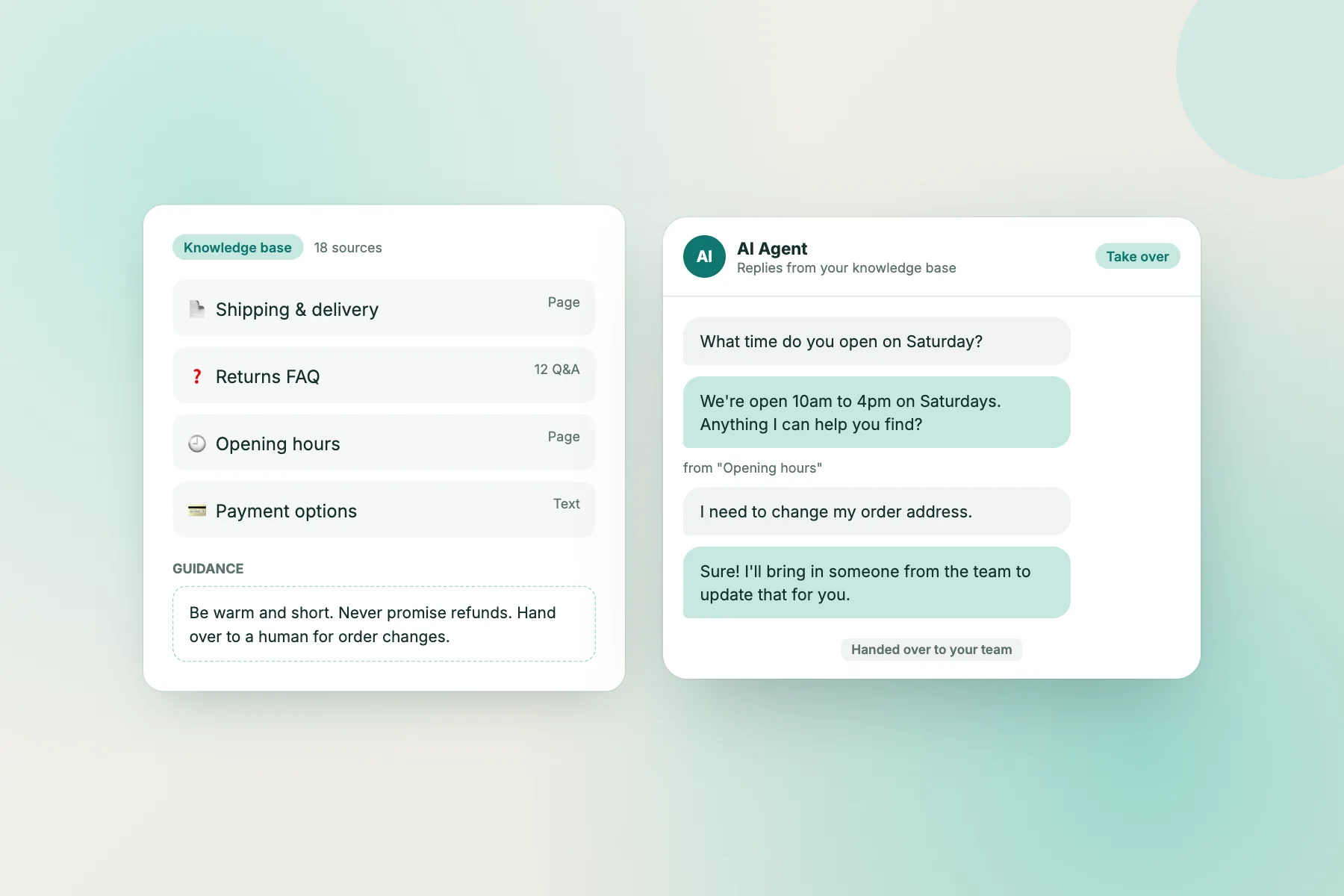
Illustrative: answer first, then one question per turn.
⚡ In short
- A turn is everything one side says before the other replies. Good dialogue keeps turns short and alternating.
- Answer first, then ask. Questions before any help feel like an interrogation.
- One question per turn. People answer the last question and ignore the rest.
- Never ask twice. Repeating a question tells the customer nobody was listening.
- Paste any transcript into the analyser below to see where turn-taking breaks.
What a turn is
Messages are not the unit that matters
When people review a bot, they usually read message by message and polish the wording. That helps, but it misses the shape of the conversation. The unit that matters is the turn: everything one side says before the other side gets to reply.
A bot that sends “Hello!”, then “Welcome to Green Leaf Salon”, then “We offer haircuts, colour, facials and more”, then “How can I help?” has taken one long turn split into four bubbles. The customer has had to watch and wait. In a face-to-face shop, that’s the assistant who talks at you while you’re trying to ask a question.
Good chatbot dialogue alternates. The bot says something short, the customer replies, the bot responds to what they actually said. Each bot turn either answers, asks one thing, or confirms. Each customer turn moves them closer to what they came for.
Turn-taking also explains a lot of the frustration in bad chats. Customers rarely complain “the wording was poor”. They say “it kept asking me things”, “it didn’t answer my question” or “I couldn’t get to a person”. Those are all turn-taking failures, and they can be measured in a transcript.
Six habits
How good dialogue takes turns
1
Short openings
One greeting bubble with a question or a few buttons. Don’t list everything you offer.
2
Answer first
If the customer asked something, answer it in the next turn, even partly, before asking anything.
3
One question per turn
Ask one thing, wait, then ask the next. Combine only things answered in one word, like date and time.
4
Remember answers
Never ask for a detail the customer already gave, even in a different form.
5
Confirm before acting
Repeat the key details in one line before booking or creating a ticket: “6:30 pm tomorrow at Baner, under Priya?”
6
Honour requests for a person
If someone asks for a human, the very next turn offers one, or says honestly when they’ll reply.
Habits 1 and 2
Short openings, and answering before asking
Short openings. The greeting is the bot’s first turn, and the longer it is, the longer the customer waits to speak. One bubble is enough: “Hi! What can we help with?” plus three or four buttons for the most common reasons. If you want to mention an offer, make it one of the buttons rather than a paragraph.
Most customers arrive with a question already in mind. Many will type it before the greeting has finished. A short opening gets out of their way.
Answer first. This is the habit that most changes how a bot feels. When a customer asks “do you have a slot tomorrow evening?”, the weak reply is “Sure! What is your name?” The strong reply answers: “Yes, 5 pm and 6:30 pm. Which suits you?” Name and phone number can come once they’ve picked a slot and have a reason to give them.
The rule applies even when you can’t fully answer. “Delivery to most of Pune takes 2 days. Which area are you in?” gives something useful and asks one thing. Compare “Please share your pin code”, which gives nothing and asks for something.
Collecting details first is often a sales habit: get the lead before anything else. In chat it backfires. A customer who gets a useful answer is far more willing to share a number than one who’s been asked for it up front. LiveChatBot has no pre-chat form for exactly this reason; the away form only asks for an email or phone number when nobody is online to reply.
Habits 3 and 4
One question per turn, and never asking twice
One question per turn. “What’s your name? And which branch would you like?” looks efficient. In practice most people answer the second question, or the one that’s easier, and the bot then has to ask the first again. Two questions in one turn often costs an extra turn rather than saving one.
The exception is details that naturally go together and are answered in one breath: “Which day and time?” or “Your name and phone number?” Even those work better as buttons or a short form at the end than as open questions mid-chat.
Never asking twice. Few things annoy customers more than being asked for something they’ve already given. It happens in two ways. A menu bot follows a fixed path and asks “What service would you like?” even though the customer typed “haircut” earlier. Or a handover goes badly and the human agent starts again from “How can I help?”
Fix the first by designing flows that skip questions already answered, or by keeping flows short. Fix the second by reading the whole chat before replying. In LiveChatBot the team inbox shows the full conversation, including what the bot said, so agents can pick up from the last turn. Our guide to bot-to-human handover covers this in detail.
Habits 5 and 6
Confirming, and honouring a request for a person
Confirm before acting. When the dialogue ends in an action, such as a booking, an order or a ticket, repeat the key details in one turn: “6:30 pm tomorrow at Baner, under Priya. Shall I confirm?” It’s one extra turn, and it catches mistakes before they become a no-show or a complaint. Keep the confirmation to one line; don’t restate the whole conversation.
Honour a request for a person. If a customer types “can I talk to a person”, the next turn must respond to that. “Is there anything else I can help with?” is the worst possible reply: it ignores the customer’s last turn entirely. Good replies are “Sure, connecting you to our team now” when someone’s available, or, out of hours, “Our team is back at 10 am. Leave your number and we’ll call you” with the away form.
This habit matters most because it’s the customer’s escape hatch. People who know they can always reach a person are more patient with the bot, not less. LiveChatBot’s opening hours setting controls when your team shows as available, and messages left offline can become tickets so nobody’s request is lost.
Together, the six habits make a simple chatbot dialogue feel considerate. None of them needs AI; a well-planned button bot can follow every one.
Free tool
Analyse the turns in any chatbot dialogue
Paste a real transcript or a planned script with Bot: and Customer: at the start of each line. The analyser checks the talking balance, monologues, double questions, slow starts, repeated questions and ignored requests for a person.
Paste a chat transcript or a planned script, one message per line, each starting with Bot: or Customer: (Agent: and Visitor: also work).
Runs only in your browser; the transcript is not sent or saved. Remove phone numbers and names before pasting real chats.
Before and after
The salon example, rewritten turn by turn
Turn budgets
How many turns should a task take?
A useful planning habit is to give each common task a turn budget: the number of customer turns it should take from first message to done. If a real chat goes far over budget, something in the dialogue is making the customer work too hard.
Rough budgets for typical small-business tasks:
- A factual question (hours, price, delivery area): one customer turn. They ask, the bot answers, done.
- A booking or appointment: three to four customer turns. Ask, pick a slot, give a name or number, confirm.
- An order status question: two turns. Ask, give the order number.
- A complaint: three to five turns before a person takes over. Say what happened, give the order or booking reference, say what they want, then a human continues.
- A sales enquiry for a quote: three to four turns to collect what’s needed, then a person.
These aren’t rules from a study; they’re working targets for planning. The value is in comparing them with your transcripts. When a booking takes nine customer turns, the analyser above will usually show why: a repeated question, two questions in one turn, or answers held back until details were collected.
If you write scripts before building, test them against the budget too. Our live chat scripts page has wording you can adapt for each task.
Reviewing real chats
A monthly fifteen-minute routine
Planned scripts are tidy; real chats aren’t. Customers type half-sentences, change their mind, ask two things at once and go quiet mid-chat. The way to keep your dialogue healthy is to review real transcripts regularly.
Once a month, pick five chats: two that went well, two that went badly (long, or ended without the customer getting what they wanted), and one at random. Remove names and phone numbers, then paste each one into the analyser.
Look for patterns across the five rather than fixing every single warning. If the bot asks two questions at once in three of the five chats, that’s one flow step to rewrite. If customers repeat themselves in several, an early answer is missing. If someone asked for a person and didn’t get one, check your flow and opening hours straight away.
Then make one or two changes and note them. Next month, check whether the same warning still appears. Small, steady changes beat a big rewrite every six months.
You can also review your team’s turns the same way. Agents fall into the same habits as bots: long monologues, asking for the order number twice, or replying to a request for a refund with a policy paragraph. Paste the agent’s lines as Bot: and the analyser treats them identically.
Frequently asked questions
What makes chatbot dialogue sound natural?
Mostly turn-taking: short openings, answering before asking, one question per turn, never asking twice, confirming before acting and offering a person when asked. Word choice matters less than these habits.
Should a bot ask for the customer’s name first?
Usually not. Answer the customer’s question first, then ask for a name or number only when you need it, such as to confirm a booking.
How many messages should a bot send in a row?
Two at most. A greeting plus one follow-up is fine; three or more feels like a monologue and delays the customer’s first reply.
Can a button bot follow these habits?
Yes. None of them needs AI. Short menus, direct answers at the end of each path and a visible route to a person cover most of them.
Can I analyse human agents’ chats too?
Yes. Paste agent lines as Bot: and the analyser applies the same checks, which is useful for training new team members.
Keep reading
Related guides
Chatbot Development, Stage by Stage: How Long Each Step Takes and Where the Hours Really Go (Free Effort Estimator)
Chatbot Design Blueprint: Sketch Your Bot’s Menu Tree on Paper and Catch Problems Before You Build
Let the customer talk
Short openings, answers first and a person one tap away. Build your flows and saved replies free on livechatbot.in.