AI Chatbot Solutions Mapped to Real Problems: 12 Business Headaches and the Fix for Each (Including When It Isn’t a Bot)
AI chatbot solutions are usually sold feature-first: AI answers, proactive messages, integrations. Business owners think problem-first: too many calls, missed enquiries at night, abandoned carts, slow replies. This guide starts from twelve common problems and maps each to the specific chatbot setup that helps, and is honest about the cases where the real fix lies somewhere else.
⚡ In short
- Start from your problem, not from a feature list.
- Each problem below has a specific setup: knowledge, Flows, handover, tickets or integrations.
- Some problems look like chat problems but aren’t: hidden prices, slow delivery, unclear pages.
- Fix one problem at a time and measure it before moving on.
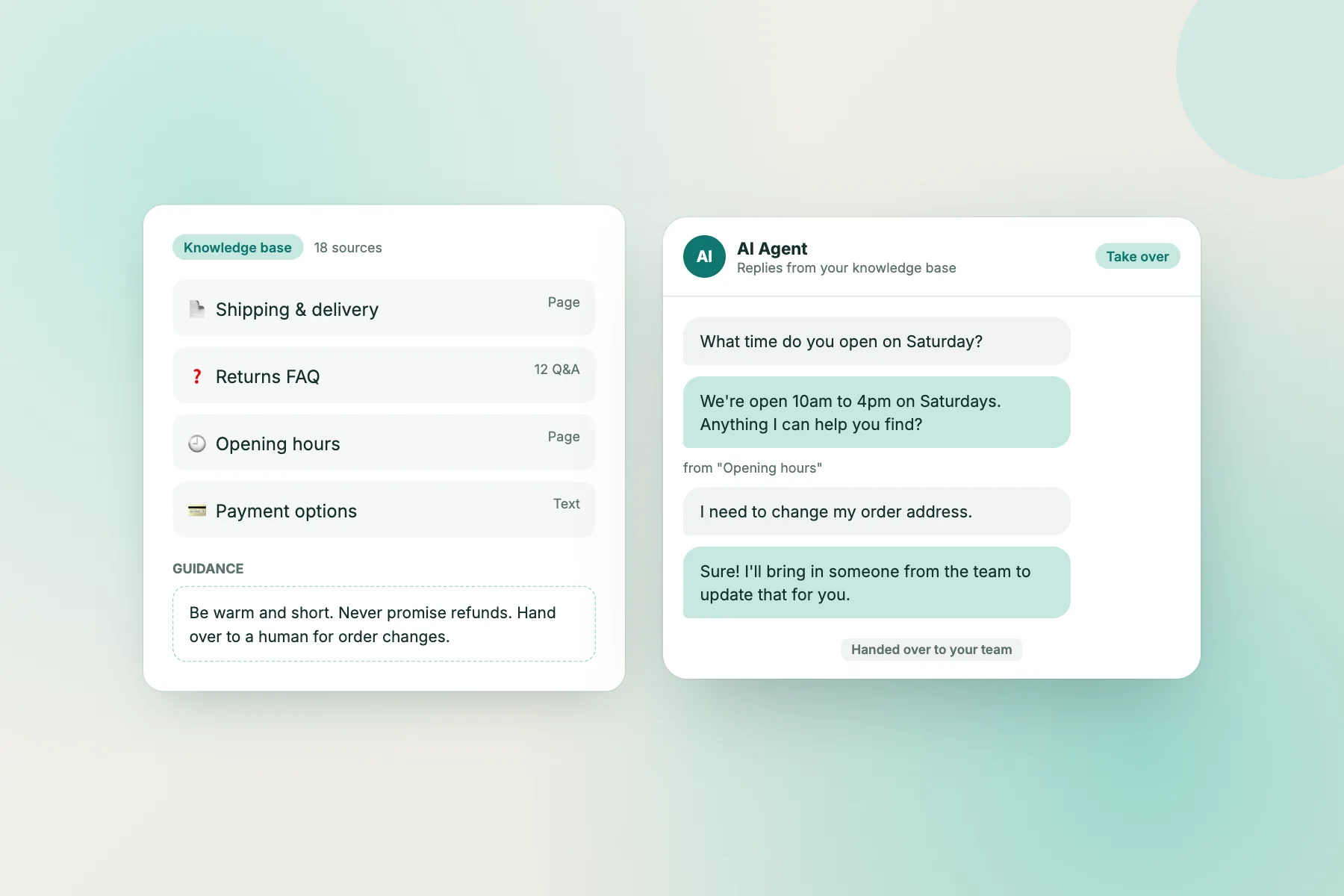
Problem-first thinking
Why the order matters
When businesses buy software feature-first, they often switch on everything and fix nothing in particular. A proactive message here, an AI answer there, an integration nobody checks. Months later, it’s hard to say whether any of it helped.
Problem-first thinking flips that, and it’s how the best AI chatbot solutions are chosen. You name one specific headache, such as “we miss enquiries that arrive after 7 pm”, choose the smallest setup that addresses it, and measure whether the headache shrinks. Then you move to the next problem. It’s slower to start but far more effective, and it makes every change easy to explain to your team.
It also protects you from a common trap: using a chatbot to paper over a problem that lives elsewhere. If customers keep asking about delivery charges because they’re hidden until checkout, the best fix is showing delivery charges on product pages, not a cleverer bot. Each map below includes a “not a bot problem if” line for exactly that reason.
Customer-facing problems
Six headaches customers feel directly
Too many repeat calls and WhatsApps
Solution: Answer the top repeat questions instantly on the website.
Set up: Write your top 15 answers as knowledge and saved replies; welcome line naming the top topics.
Not a bot problem if: The answers are missing from your website entirely. Add them to the site too.
Enquiries missed at night
Solution: Answer common questions any time and collect contact details for the rest.
Set up: Opening hours, an honest away message collecting phone or email, offline messages turned into tickets.
Not a bot problem if: You never follow up next morning. Fix the follow-up habit first.
Abandoned carts
Solution: Answer last-minute doubts about delivery, payment and returns at the cart.
Set up: A Flow on the cart page after 20–30 seconds; knowledge on delivery costs, COD and returns.
Not a bot problem if: Delivery charges appear as a surprise at checkout. Show them earlier.
Slow replies frustrate people
Solution: Instant bot answers for simple questions; faster human replies for the rest.
Set up: Bot handles repeats; handover rules, phone alerts and saved replies speed up people.
Not a bot problem if: You simply don’t have enough staff for complex enquiries.
Customers write in other languages
Solution: Greet and answer in the visitor’s language.
Set up: Auto language with welcome translations; AI answers in the visitor’s language; native-speaker checks.
Not a bot problem if: Your products or policies don’t serve those customers anyway.
Complaints escalate before anyone sees them
Solution: Calm instant acknowledgement and fast handover with details.
Set up: Complaint intake: acknowledge, collect order number and photo, ticket, honest timeline.
Not a bot problem if: The same fault keeps happening. Fix the product or process.
Business-side problems
Six headaches your team feels
Leads get lost between channels
Solution: Collect leads in one place and send them where your team works.
Set up: Flows that collect email; Zapier or webhooks to a sheet or CRM; weekly check.
Not a bot problem if: Nobody owns follow-up. Name an owner.
We don’t know what customers want
Solution: Use chat history as continuous feedback.
Set up: Weekly read of 20 chats; tagging; a feedback Flow on the thank-you page.
Not a bot problem if: You’re not willing to act on what you hear.
Chats fall between team members
Solution: One shared inbox with clear ownership.
Set up: Team logins, assignment, roles by hour, tickets for follow-ups.
Not a bot problem if: Roles aren’t agreed. Decide who does what first.
Visitors browse and leave silently
Solution: Start conversations at moments of interest.
Set up: One Flow on a key page for returning visitors or long browses.
Not a bot problem if: The page itself is confusing or slow. Fix the page.
Staff type the same answers all day
Solution: Saved replies for people; bot for the most common ones.
Set up: Saved replies with {name}; keyword bot and AI Agent for repeats.
Not a bot problem if: The answers keep changing. Stabilise the policy.
Promises made in chat aren’t kept
Solution: Turn every promise into a tracked ticket.
Set up: Tickets with owners and statuses; daily morning check.
Not a bot problem if: There’s no time to fulfil promises. Promise less.
Choosing your first problem
Pick the one that hurts most and is easiest to measure
You probably recognised several problems. Don’t try to fix them all at once. Pick one using two criteria.
How much does it hurt?
Count it roughly. How many calls a day are repeat questions? How many evening enquiries go unanswered? How many carts are abandoned? The biggest number usually wins.
Can you measure it?
Choose a problem you can count before and after. “Repeat WhatsApp messages per day” is measurable. “Customers feel more valued” is not, at least not easily.
A common winning first choice
For most small businesses, the first problem is repeat questions or missed evening enquiries. Both are easy to measure, both respond quickly to a simple setup, and both free up time for the next problem. Our one-afternoon setup handles both at once.
Write it down
“Problem: about 25 repeat questions a day on WhatsApp. Goal: halve it in four weeks. Setup: top 15 answers + welcome line.” One sentence each. Revisit after four weeks and decide what to tackle next.
Three mini stories
How problem-first fixes play out
These short, made-up stories show the approach in practice. Each business started with one problem, chose the smallest fix, and measured it.
The tuition centre with a ringing phone
A coaching institute’s receptionist spent most mornings answering the same questions about batch timings and fees. They wrote twelve answers, added a welcome line naming batches and fees, and set opening hours. After four weeks, the receptionist was answering far fewer repeat calls and had time to call back interested parents properly. The second problem they tackled was parents enquiring late at night, solved with an away message and morning ticket list.
The furniture shop losing carts
An online furniture store noticed many abandoned carts. Reading chats revealed the real doubt: assembly. Was it included? They added an assembly answer, a cart-page Flow mentioning it, and put a line about assembly on product pages too. That last part, a website fix rather than a bot fix, turned out to matter as much as the chat.
The salon with lost leads
A salon collected phone numbers in chat but follow-ups depended on someone remembering. They sent every new lead to a shared sheet through Zapier and made one person responsible for calling within the day. Bookings from chat became steady instead of occasional.
In each case, the AI chatbot solutions were simple. What made them work was choosing one problem, fixing it fully, and checking the result.
When it isn’t a bot problem
Five signs the fix lives elsewhere
AI chatbot solutions are powerful, but they can’t fix everything, and the most successful businesses are honest about that. These signs suggest the root cause is somewhere else.
- The same question comes up because information is hidden. Fix the website: show delivery costs, opening hours and return rules where people look.
- The same complaint comes up because something keeps going wrong. Fix the product, packaging, courier or process. The bot can acknowledge, but not prevent.
- Customers want a person and you have nobody available. No bot design replaces staff for complex, personal enquiries. Adjust hours, staffing or promises.
- Your policies are unclear even to staff. A bot can’t explain a rule your team can’t agree on. Clarify the policy first.
- Traffic is very low. If you get a handful of visitors a day, a bot may have little to do. Focus on getting found first.
Recognising these saves money and frustration, and often makes the eventual bot more effective, because it’s built on a clearer business.
Measure the fix
Before-and-after numbers for each problem
| Problem | Measure before and after | Where to find it |
|---|---|---|
| Repeat calls/WhatsApps | Repeat questions answered by hand per day | Your tally, chat history |
| Missed night enquiries | Evening enquiries captured and followed up | Offline messages, tickets |
| Abandoned carts | Cart-page chats ending in an order | Chat history + store orders |
| Slow replies | Time to first human reply | Inbox, handover times |
| Lost leads | Leads collected and followed up | Lead sheet or CRM |
| Unkept promises | Tickets closed within promised time | Ticket statuses |
For more on counting simply, see chatbot UX metrics.
Putting it together
A three-month roadmap
With problem-first thinking, a small business can address three or four headaches in a quarter without overwhelm.
Month 1: repeat questions and night enquiries
Knowledge, saved replies, welcome line, opening hours, away messages, tickets. Measure repeat questions and evening captures.
Month 2: the money moment
A Flow on your cart, pricing or booking page, with answers to the doubts that stop people. Measure chats ending in orders or bookings.
Month 3: the team side
Leads to a sheet or CRM, roles, saved replies with names, a weekly review habit. Measure leads followed up and reply times.
At each step, keep what works and drop what doesn’t. By the end of the quarter, your chat isn’t just a widget; it’s solving specific problems you can name and measure.
Everything mentioned here is part of LiveChatBot’s free plan for two websites with 100 visitors per website each month: the AI Agent with a small monthly AI allowance, the free keyword bot, Flows, tickets, Zapier, webhooks and the Android app. Start on livechatbot.in with your first problem.
Frequently asked questions
What are AI chatbot solutions for small businesses?
Specific chat setups that solve business problems, such as answering repeat questions, capturing night enquiries, rescuing carts and organising leads.
Which problem should I solve first?
The one that hurts most and is easiest to measure, often repeat questions or missed evening enquiries.
Can a chatbot fix abandoned carts?
It can answer last-minute doubts at the cart, which helps. If extra costs are hidden until checkout, show them earlier too.
How do I know a chatbot solution worked?
Measure the specific problem before and after, for example repeat questions per day or evening enquiries captured.
Do I need AI for these fixes?
Not for all of them. Opening hours, away messages, tickets, Flows and saved replies work without AI. AI helps most with varied wording and open-ended questions.
When is a chatbot the wrong solution?
When the root cause is hidden information, a recurring fault, unclear policies, no staff for complex cases, or very low traffic.
Keep reading
Related guides
AI Chatbot Software Maintenance Calendar: What to Check Daily, Weekly, Monthly and Yearly
AI Chatbot Services: Should You Hire Help or Do It Yourself? A Buyer’s Guide to Agencies, Freelancers and DIY
AI Chatbot Python Tutorial: From a 20-Line Keyword Bot to Grounded AI Answers With a Safe Fallback
Name your first problem today
Then set up the smallest fix, free on livechatbot.in, and measure it for four weeks.