Names for Chatbots, Shortlisted and Tested: Five Checks to Pick a Bot Name Customers Can Say, Type and Trust (Free Name Tester)
Names for chatbots are easy to find; lists of hundreds are a search away. Picking the right one for your business is the hard part. A name that looks charming on a list can be impossible to pronounce, clash with your receptionist’s name, sound like a famous assistant, or mislead customers into thinking a person is typing. This guide gives you a method: draw up a shortlist from five sources, run each name through five checks, and test the top two with real people. A free tool scores your shortlist in seconds.
⚡ In short
- Draw 10–15 candidates from your brand, your trade, your place, helper words and short friendly names.
- Check each: easy to say, easy to type, no clash, honest, fits your brand.
- Avoid famous assistant names and your own staff’s names.
- A human-sounding name is fine if the welcome line says it’s a bot.
Why a list isn’t enough
Picking from names for chatbots is the real work
If you search for bot names, you’ll find long lists: cute ones, clever ones, puns, robots from films. They’re useful for ideas, and our own chatbot name ideas page is a good place to start. But a list can’t tell you which name suits your business, your customers and your team.
Consider a dental clinic in Indore that likes the name “Xyra” from a list. It looks modern. Then the receptionist reads it out on the phone and three patients spell it three different ways. Or a coaching institute names its bot “Priya”, not realising a counsellor called Priya also answers chats, so students never know which one they’re talking to. Or a shop picks “Alexa-style Lexi” and gets messages asking it to play music.
None of those are bad names in the abstract. They fail specific checks: say it, type it, avoid clashes, stay honest, fit the brand. Running your favourites through those checks takes ten minutes and saves you renaming later, after the name is on your widget, your welcome message and your staff’s lips.
A good bot name does three small jobs. It makes the chat feel friendlier than a blank “Support” header. It gives customers something to call it (“I asked Asha and she said…”). And it signals your brand’s tone, whether that’s warm, playful or formal. A name can’t make a bad bot good, but a wrong name can make a good bot feel odd.
The rest of this guide is the method: a shortlist, five checks and a five-person test. If you’re curious how famous bots like ELIZA, Siri and Grok got their names, see our companion guide to well-known chatbot names.
The five checks
What every name must pass
1
Say it
Two or three syllables. Anyone on your team can read it aloud on the first try, in the languages your customers speak.
2
Type it
No digits, symbols or odd spellings. People should be able to type it on a phone without autocorrect changing it.
3
No clash
Not the same as a team member, a well-known assistant, or a competitor’s bot. Not one letter away either.
4
Honest
Doesn’t trick anyone into thinking a person is typing. A human name is fine with a clear “assistant bot” label.
5
Fits your brand
Matches your tone: warm for a clinic, playful for a gift shop, calm and plain for a finance firm.
Step 1
Draw up a shortlist from five sources
Don’t start by hunting for one perfect name. Start with 10 to 15 candidates from five different sources, so you’re choosing between real options rather than settling on the first thing you liked.
Your brand. Shorten or blend your business name. “Sharma Sweets” might give “Sweety” or “Sharmi”. A brand-based name ties the bot to you and is unlikely to clash with anyone else’s.
Your trade. Use a word from what you do. A plant nursery might try “Sprout” or “Tulsi”; a bakery “Crumb” or “Cookie”; a travel agency “Safar”. Trade names tell visitors instantly what the bot knows about.
Your place. A local landmark, river or street can feel warm to local customers: “Marine” for a Mumbai seafront café, for example. Check it doesn’t confuse people outside your city if you sell nationally.
Helper words. Plain role names like “Guide”, “Helper”, “Desk” or “Assistant”, often combined with your brand: “Sharma Helper”. They’re less charming but very clear, and suit formal businesses like accountants or insurers.
Short friendly names. One- or two-syllable names like “Mira”, “Kiko” or “Nova”. These feel personal. They need the honesty check most, because they can read as a real person.
Write every candidate down without judging it yet. The checks will do the filtering. If you need more ideas in a source, ask a friend or two; people outside the business often spot names you’re too close to see.
Free tool
Score your shortlist
Paste your candidates and, optionally, your team’s first names. The tool checks length, pronounceability, typing, clashes with famous assistants and staff, and honesty, then ranks the names.
Paste your shortlist, one name per line (up to 15).
Your team’s first names (optional, comma-separated), so the tool can spot clashes.
Runs only in your browser; nothing is sent or saved. This is a quick screen, not a trademark search or legal advice.
Checks 1 and 2
Can people say it and type it?
A bot name gets said aloud more than you’d think: by staff on the phone (“you can ask Kiko on our website”), by customers recommending you, by you at a counter. It also gets typed: customers write “thanks Kiko” or “Kiko can you help”. Both need to work without effort.
Say it. Two or three syllables is the sweet spot. Read each candidate aloud. Then ask someone who hasn’t seen it written to say it back. If they hesitate or say it differently, that’s a warning. Watch for clusters of consonants (“Xyrth”, “Brynx”) and letter combinations that read differently in Indian English and Hindi. A name like “Jai” or “Mira” sounds the same to almost everyone; “Aoife” or “Siobhan” won’t.
Type it. Avoid digits, symbols and creative spelling: “Q-B0t”, “H3lpy” and “Kayte” will be mistyped constantly. Type each name on your phone and see what autocorrect does. If it changes “Kiko” to “Kilo” every time, customers will see the same.
Length on screen. Your bot’s name appears in the chat window header and next to its messages. On a phone, long names get cut off. Keep it under about 12 letters. “Sharma Sweets Helper” might work on a laptop; on a phone it becomes “Sharma Swe…”. That’s another reason short names for chatbots usually win.
If a name fails either check, drop it. There will be others on your list that pass both.
Check 3
Does it clash with anyone?
Clashes cause the most confusion, and they’re the easiest to miss because you know your own context too well.
Your team. If a staff member who answers chats is called Neha, don’t name the bot Neha, or Nehu, or anything one letter away. When the bot hands a chat to Neha, the customer won’t know who’s who. The tool above flags names within one letter of any staff name you enter. Think about future staff too: very common first names are risky for that reason.
Famous assistants. Names like Siri, Alexa, Cortana, Bixby, Gemini, ChatGPT, Claude and Copilot belong to big companies’ products. Using one, or a near copy, confuses visitors (“can you play a song?”), invites comparison you won’t win, and may infringe a trademark. Leave them alone.
Competitors and local brands. Search your bot name with your city and industry. If a competitor’s bot or a well-known local business already uses it, pick something else.
Trademarks. For a name you’ll use widely, a quick look at India’s public trademark search on the IP India website (ipindia.gov.in) is sensible. This guide isn’t legal advice; if you’re building a brand around the bot’s name, talk to a trademark professional.
Meanings in other languages. Ask staff who speak the languages your customers speak whether the name means anything awkward. A name that’s neutral in English might be slang in Marathi or Tamil.
Check 4
Is it honest?
Many businesses like giving their bot a human first name, like Asha, Ravi or Mira. That’s fine, and it can make the chat feel friendlier. The line you mustn’t cross is letting customers think a real person is typing.
The fix is simple: say it’s a bot, right in the welcome message. “Hi, I’m Asha, the clinic’s assistant bot. I can answer timing and booking questions, or connect you with our team.” The name stays warm; the label keeps it honest. Customers who know they’re talking to a bot are usually happy to use it for quick questions. Customers who find out later feel tricked.
Avoid a fake human backstory. “Hi, I’m Priya, I’ve worked here for five years!” crosses the line even if the name alone wouldn’t.
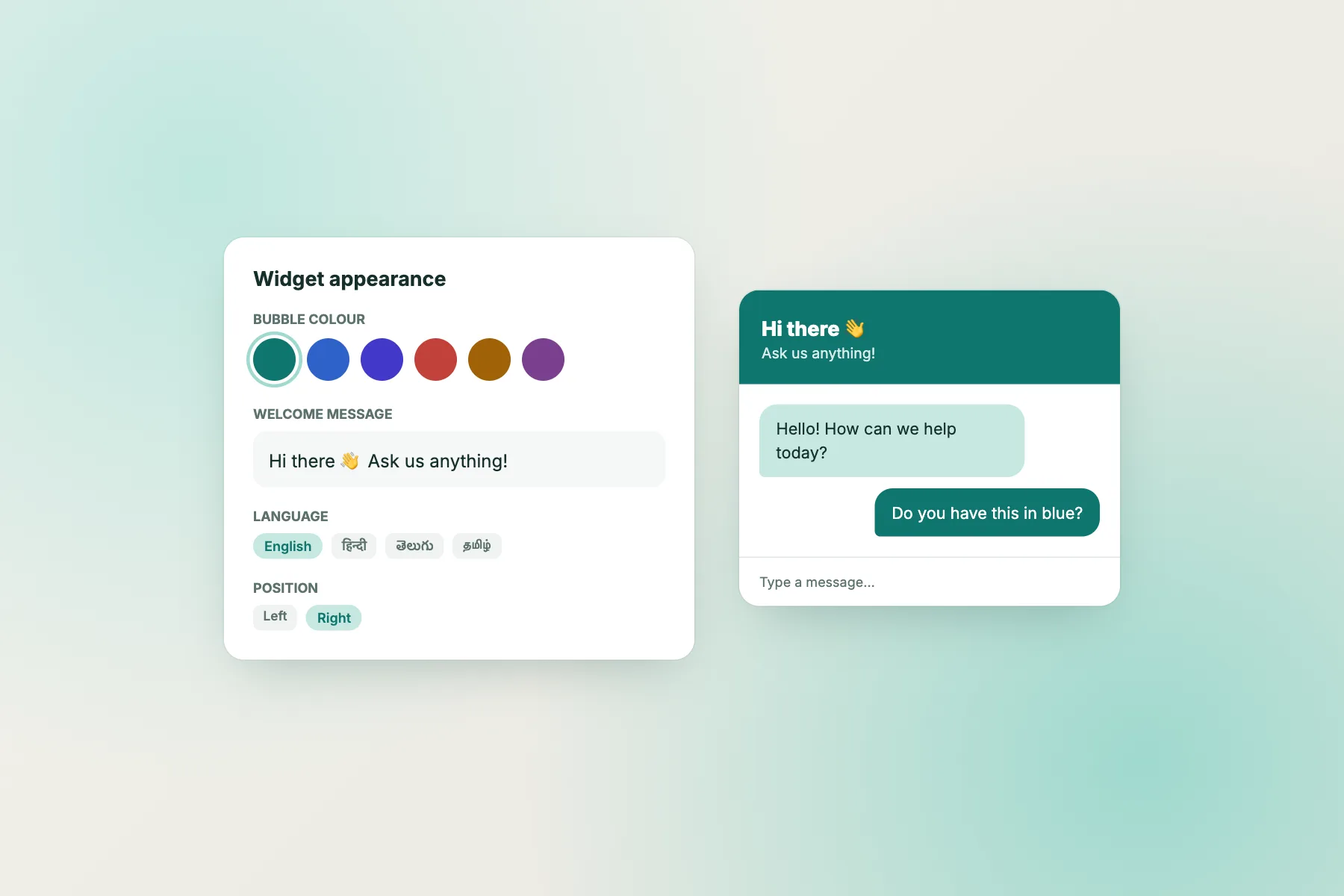
There’s a practical reason too. When the bot hands over to a person, the customer should notice the change. If the bot has a human-sounding name and your staff use first names, a clear label (and, ideally, a different avatar) makes the handover obvious. In LiveChatBot, the team name and avatar you set in the widget appear in the chat window, and messages from your team show who replied.
Our guide on telling visitors honestly whether they’re talking to a bot has copy-ready disclosure lines, and explaining what a chat bot is helps if customers ask.
Check 5
Does it fit your brand?
The last check is about tone. The same name can feel right for one business and wrong for another. “Bubbles” suits a children’s party shop; for a chartered accountant, it undermines trust. “Advisor” feels right for an insurance broker; for a street-food stall, it’s stiff.
Ask three questions. How do you talk to customers in person: formal, warm or playful? What do customers expect from your industry? And does the name still feel right when the bot delivers bad news, like “That item is out of stock” or “We can’t deliver to your pin code”? A jokey name can grate in those moments.
Also think about how the name works with your bot’s personality. If your bot writes in a calm, plain style, a quirky name will feel mismatched. Our guide to conversational bot personality helps you settle the voice first; the name should follow it.
The table below shows illustrative fits by business type. They’re examples to show the thinking, not recommendations to copy.
| Business | Tone | Illustrative name style | Avoid |
|---|---|---|---|
| Clinic or dentist | Warm, calm | Short, soft name with “assistant” label | Cute or jokey names |
| Coaching institute | Friendly, clear | Trade word (Guru-style) or brand blend | Staff or teacher names |
| Online fashion shop | Playful | Short catchy name | Long helper names |
| Accountant or insurer | Formal, plain | Brand + Helper or Desk | Pet names, puns |
| Restaurant or café | Casual, warm | Food word or local reference | Anything hard to say |
Before and after
Weak names, and what to do instead
Step 2
Test the top two with five real people
When two or three names pass every check, stop debating and test. Pick five people who resemble your customers: a couple of regulars, a friend, a family member outside the business.
Say each name aloud and ask them to type it on their phone. Count how many spell it right. Then ask which one they’d rather chat with, and why. The answers are often surprising: the name you loved may feel cold to them, or the “boring” helper name may feel reassuring.
Pick the name with the most correct spellings and the warmest reaction. Then set it everywhere at once: the widget’s team name and avatar, your welcome message, your saved replies, and the line your staff use on the phone. Our guides to customising your chat widget and writing a welcome message show where each goes.
Give it a month before you judge. If customers start using the name in messages (“thanks Asha!”), it’s working. Of all the names for chatbots on your list, the right one is the one customers actually use.
Checklist
Name decided?
Getting started
Name it, label it, launch it
Paste your shortlist into the tester, keep the top two, and run the five-person test this week. Then set the name and avatar in your widget and write a welcome line that says what the bot is and how to reach a person.
LiveChatBot’s free plan lets you set the team name, avatar and welcome text, and includes the AI Agent, a free keyword bot that answers from saved replies, and hand-over to your team, for two websites with 100 visitors per website each month. See pricing, or start at livechatbot.in.
Frequently asked questions
What makes good names for chatbots?
Short (two or three syllables), easy to say and type, not the same as a staff member or a famous assistant, honest about being a bot, and in the same tone as your brand.
Can I give my bot a human name?
Yes, as long as the welcome message says clearly that it’s a bot, for example “Asha, our assistant bot”. Don’t add a fake human backstory.
Should I use a famous assistant name like Alexa?
No. It confuses visitors, invites comparison and may clash with a trademark. Choose a name nobody else in your space uses.
Does the bot’s name affect how many people use it?
A name alone won’t make a weak bot useful, but a clear, friendly name with an honest label makes the chat feel approachable. Test your top two with real customers.
Where does the name appear in LiveChatBot?
In the widget’s team name and avatar, which show in the chat window, and in any welcome message or saved replies you write. Update them all together.
Keep reading
Related guides
Meaning of Chat Bot, Explained to Five Different People: Parents, Staff, Customers, Children and Your Business Partner (Free Explainer in English, Hindi and Hinglish)
Names of Chatbots, Decoded: 30 Famous Bots From ELIZA to Le Chat, Who Made Them and What Their Names Mean (Free Searchable List)
Make a Chatbot by Picking Its First Job: Four Bot Recipes for Small Businesses, From Job Sentence to Test Questions (Free Recipe Builder)
Give your bot a name customers use
Set the team name, avatar and an honest welcome line in minutes. Start free on livechatbot.in.