AI Chatbot Benefits for Customers, Staff and Owners: Which Ones You’ll Actually Get, and How to Prove Them
AI chatbot benefits are real, but they aren’t the same for every business. A clinic where half the enquiries arrive at night gets a very different payoff from a showroom where the owner already replies within minutes. And benefits you don’t measure are benefits you can’t prove, to a partner, a manager, or yourself six months from now. This guide separates the benefits by who gets them, shows which business traits make each one likely, explains the baseline to record before you switch anything on, and gives you a quick checker that tells you which benefits to expect.
Customers
Answers now, in their language.
Staff
Fewer repeat questions.
Owner
Leads kept, evenings back.
⚡ In short
- Benefits land on three groups: customers, staff and the owner. Each group cares about different ones.
- Whether you get a benefit depends on your business: night-time enquiries, repeat questions, languages, current reply times.
- Record a baseline for two weeks before launch, or you won’t be able to show the difference.
- Every benefit depends on having prices and policies written down. That’s step zero.
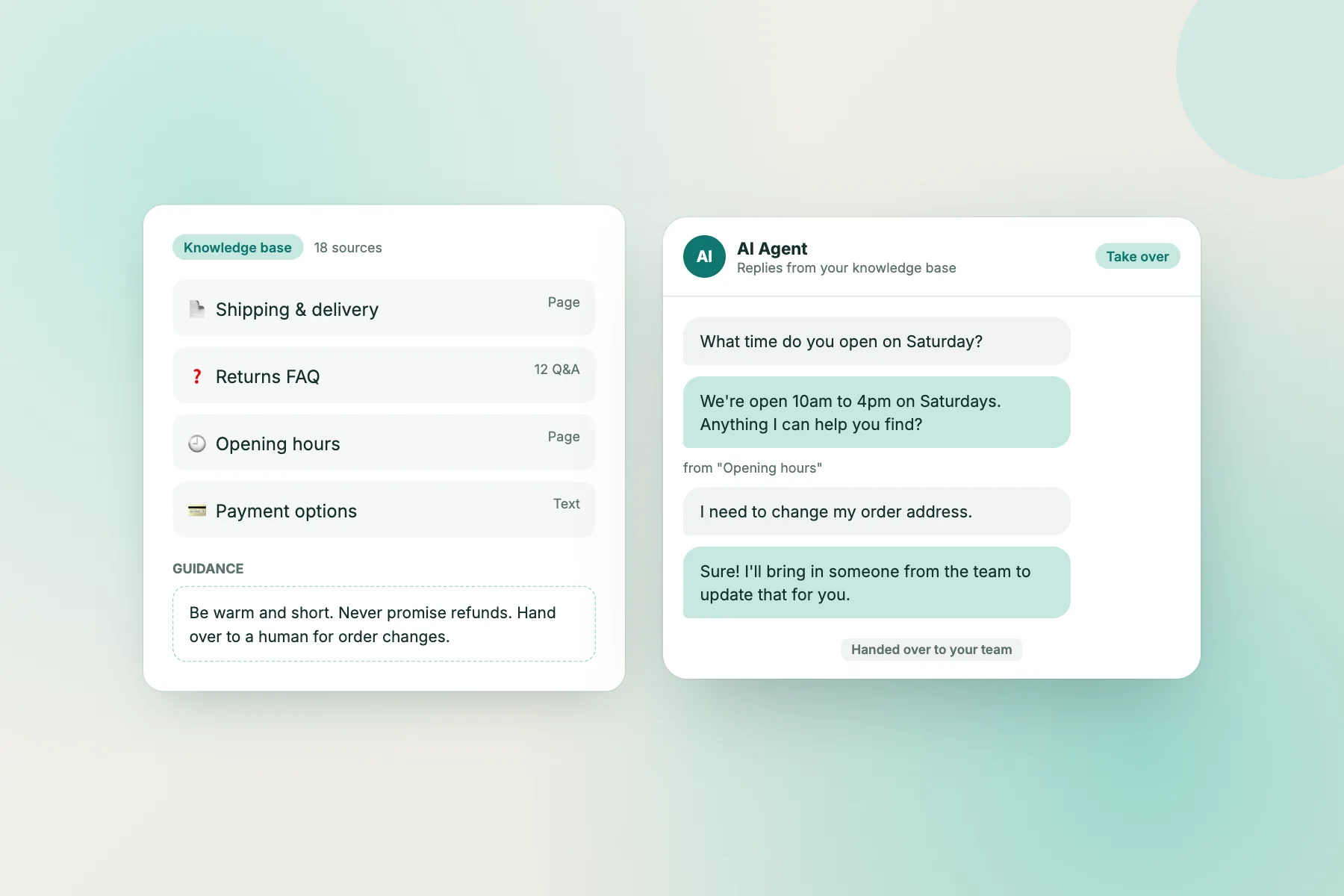
Who benefits
The same bot means different things to different people
When people list AI chatbot benefits, they usually mix together three different audiences. Separating them helps, because each group judges the bot by its own experience.
Customers care about getting a correct answer quickly, without waiting, in words they understand. They don’t care that it’s AI. They care that the answer about COD or delivery to their pin code arrives now, not tomorrow morning. They also care, a lot, about being able to reach a person when the bot can’t help.
Staff care about the questions they no longer have to answer. A receptionist who types “we’re open 10 to 7, Monday to Saturday” thirty times a day will notice when it drops to five. They also care that the bot doesn’t create work: wrong answers that customers then complain about, or hand-overs that arrive without context.
Owners care about leads not lost, evenings not spent on the phone, and costs that make sense. They’re also the ones who need proof, because they’re paying.
A launch goes well when all three groups feel a benefit within the first month. It goes badly when the owner sees “more leads” while staff see “more angry customers the bot misled”. Plan for all three.
Free tool
Which benefits will your business actually get?
Answer seven quick questions. You’ll see each benefit rated strong, moderate or unlikely, with the baseline to record now.
A rule-of-thumb guide, not a forecast. Runs in your browser; nothing is saved.
Customer benefits
What visitors gain, and when they gain it
Answers outside opening hours
The biggest benefit for most small businesses, but only if many enquiries arrive after hours. Check your own pattern: look at timestamps on last month’s WhatsApp messages, emails and form submissions. If a third arrive after closing, this benefit alone can justify the bot.
A faster first reply
If you already reply within two minutes, a bot adds little here. If replies take hours, the improvement is dramatic. Speed matters most for questions asked while deciding: price, delivery, availability.
Their own language
For businesses whose customers write in Hindi, Hinglish or a regional language, a bot that replies in the same language removes friction. Test this with real phrasing before relying on it; our Indian language test pack helps.
No awkwardness
Some people prefer asking a bot simple questions, such as “is this too basic to ask?”, because there’s no social cost. This is a quiet benefit, but owners often notice more questions being asked once a bot is there.
Where customers don’t benefit
When the bot gives wrong answers, blocks access to a person or loops. Every customer benefit disappears if the hand-over is poor.
Staff and owner benefits
What the business gains
Fewer repeat questions
Most businesses find that a small set of questions makes up a large share of enquiries. When the bot handles those, staff time goes to the conversations that need a person: complaints, custom orders, sales. This benefit is strongest when one person answers enquiries between other work.
Leads that would have been lost
A visitor who arrives at 10 pm, gets an answer, and leaves a phone number is a lead you’d otherwise never have seen. LiveChatBot’s away form collects email or phone outside opening hours, and offline messages can become tickets so nothing gets forgotten.
Owner evenings back
For owner-run businesses, this is often the benefit that matters most and gets measured least. Track it: minutes per evening spent answering basic questions, before and after.
Better information
Chat history shows what customers actually ask, in their words. Owners use it to fix confusing product pages, add missing FAQ answers and spot demand. Our guide to chat history as a data source has seven examples.
Where the business doesn’t benefit
If enquiries are mostly complaints, mostly unique, or mostly about things that change daily, the bot saves little time and may add risk. Then the AI chatbot benefits are small, and a well-run inbox matters more.
Baselines
Record these numbers for two weeks before launch
Without a ‘before’, you can’t show an ‘after’. None of these need special software.
After launch
How to compare fairly
After launch, measure the same things in the same way for the same length of time, then compare. A few rules keep the comparison honest.
Compare like with like. Don’t compare a festival fortnight with a quiet one. If your business is seasonal, compare with the same period last year, or run your baseline right before launch.
Count resolutions, not chats. A bot that has 300 conversations but resolves only 40 hasn’t saved much. Read a sample and mark each as resolved by the bot, handed over or abandoned.
Ask the staff. Numbers miss things. A five-minute conversation with the people who answer enquiries (“what’s easier, what’s harder?”) often tells you more than a spreadsheet.
Watch for new costs. Time spent writing and updating knowledge, fixing wrong answers and handling confused customers is real. Subtract it.
Give it a month. The first week includes setup mistakes. Most bots improve sharply once the owner reads real chats and fixes the gaps.
For a structured approach to proving value to a partner or manager, use our one-page business case. This guide is about knowing which AI chatbot benefits to expect; that one is about presenting them.
Illustrative example
A small coaching institute, before and after
Made-up numbers to show the method, not a real result.
| Measure | Before (2 weeks) | After (2 weeks) | What it shows |
|---|---|---|---|
| Enquiries after 8 pm | 38, answered next day | 38, of which 29 answered by the bot | After-hours benefit is strong |
| Owner minutes per evening | About 45 | About 15 | Owner time back |
| Leads with phone number | 21 | 30 | Fewer lost enquiries |
| Repeat fee questions to front desk | About 25 a day | About 8 a day | Staff relief |
| Hindi or Hinglish enquiries | 12 | 12, all answered in kind | Language benefit, small volume |
In this illustration the institute gets strong benefits on after-hours answers and owner time, a modest one on leads, and a small one on languages. That pattern matches what the fit checker would predict for a business with many evening enquiries and lots of repeat fee questions. For more on education specifically, see live chat for education.
Slower benefits
Gains that show up after three to six months
Some benefits don’t appear in a two-week comparison. They build slowly, so note them in a diary rather than a spreadsheet.
A clearer website
After a few months of reading chats, most owners rewrite at least one product or pricing page, because the same confused question keeps coming. Fewer questions follow. The bot made the website better, indirectly.
Consistent answers
When the bot and the staff all answer from the same written knowledge, customers stop getting different answers depending on who replied. That shows up as fewer “but your colleague said…” conversations.
Faster training for new staff
The written answers, saved replies and chat history become a ready-made training pack. A new hire can read real conversations on day one instead of learning by shadowing for weeks.
Better decisions about demand
Questions about products you don’t stock, areas you don’t deliver to or timings you don’t offer are signals. A few months of chat history gives you evidence for decisions that were guesses before.
None of these can be promised in advance, and they depend on someone actually reading the chats. But they’re often the reason owners keep the bot long after the launch excitement fades.
Step zero
The condition every benefit depends on
None of these benefits arrive if the bot doesn’t know your answers. Before switching on any AI assistant, write down your top fifteen questions with clear, current answers: prices or price ranges, delivery or service areas, timings, payment options, policies. If two staff members give different answers to the same question, settle it first.
That written knowledge is also useful on its own. It becomes your FAQ page, your saved replies for staff, and the training material for new hires. Many owners find this step alone reduces confusion.
Once it’s written, LiveChatBot’s AI Agent answers from it, and a free keyword bot answers from your saved replies when AI replies aren’t available, so visitors always get a response. Your team takes over from a shared inbox or the Android app, with no per-seat charges. The free plan covers two websites with 100 visitors per website each month. Start on livechatbot.in.
Frequently asked questions
What are the main AI chatbot benefits for a small business?
Answers outside opening hours, faster first replies, fewer repeat questions for staff, replies in the customer’s language, fewer lost leads and time back for the owner.
Will every business get these benefits?
No. They depend on your enquiry pattern. Businesses with many after-hours and repeat questions benefit most; those with mostly complaints or unique requests benefit least.
How do I prove the benefits?
Record a two-week baseline before launch (enquiries, after-hours share, reply time, leads, owner minutes), then measure the same way after launch.
How long before benefits show?
Usually within a month, once you’ve read real chats and fixed the gaps in the bot’s knowledge.
What’s the most overlooked benefit?
Better information: chat history shows exactly what customers ask, which helps you fix product pages and FAQs.
Keep reading
Related guides
AI Chatbot Applications, Prioritised: Which Jobs to Give Your Bot First, Next, and Never
AI Chatbot Advantages, Compared Honestly: Against FAQ Pages, Button Bots, Live Chat, WhatsApp and Email
AI Chat Bot API, One Request at a Time: What You Send, What Comes Back, and What Each Chat Costs
Know which benefits to expect, then prove them
Check your fit, record a baseline and launch with your answers written down. Start free on livechatbot.in.