Agent Live Chat Reply Checker: Score Any Message Against 12 Habits Before You Hit Send
Agent live chat replies are judged in a few seconds. The customer reads your message on a phone, often while annoyed, and decides from the tone whether you’re helping or brushing them off. Most weak replies aren’t wrong; they’re written like an office letter, too long, vague about time, or missing a simple apology. This guide breaks a good chat reply into twelve habits a new agent can learn in a week, shows each habit with a before and after, and gives you a checker that scores any reply against them before you hit send.
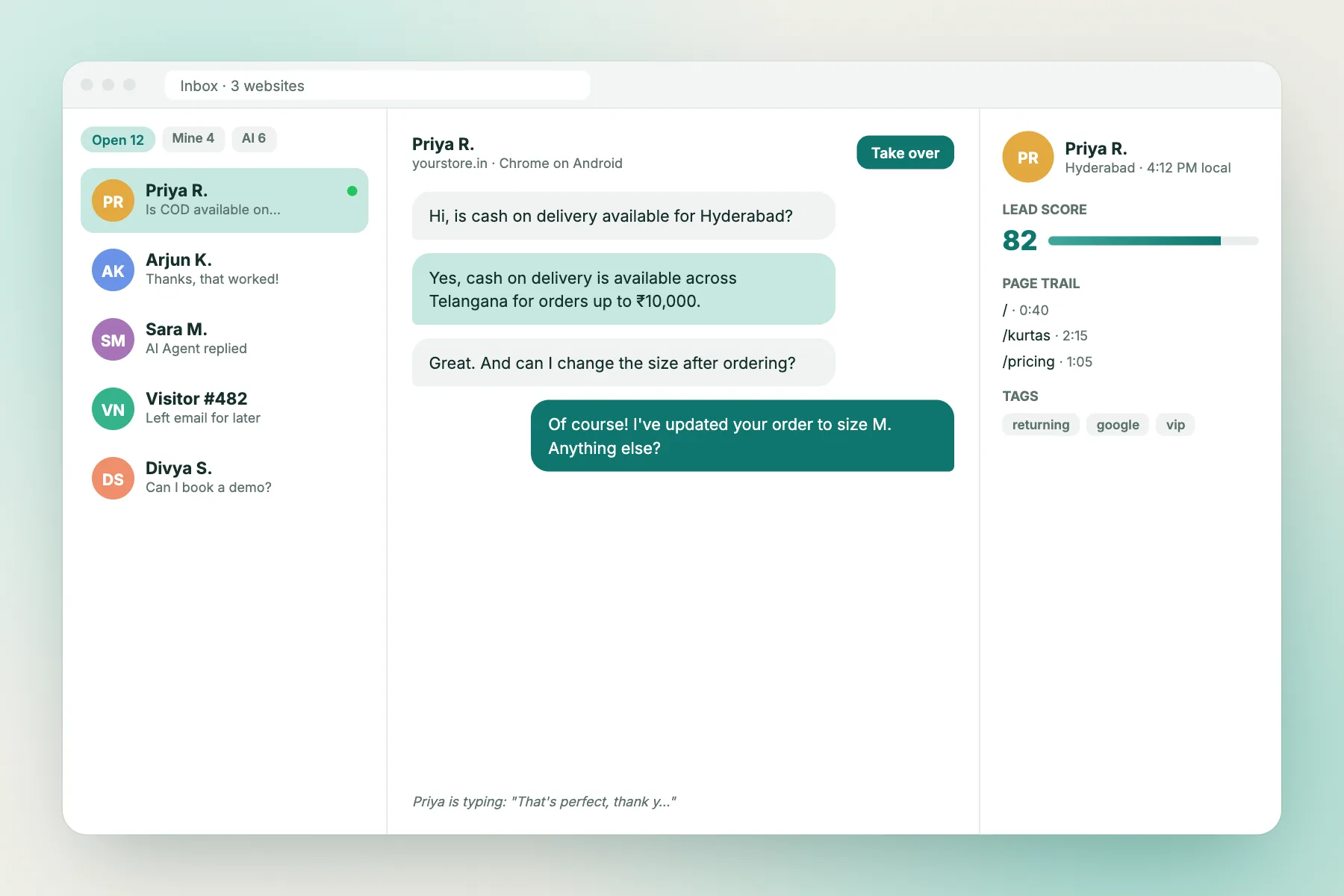
Illustrative chat. Same facts, very different feeling.
⚡ In short
- Good chat replies are short, specific about time, free of office jargon and end with a clear next step.
- Unhappy customers need a brief acknowledgement before facts.
- Twelve habits cover most of what separates a calm, helpful agent from a stiff or defensive one.
- Paste any reply into the checker to see which habits it meets. It checks wording, not facts.
Why wording matters
Chat is read on a phone, by someone who’s waiting
Email gives people time to read. Chat doesn’t. A customer who opened your chat window is waiting for the next message, usually on a small screen, sometimes in a queue at the bank or on a bus. They skim. They notice tone before content.
That changes what a good reply looks like. A paragraph that would be fine in an email feels like a wall in a chat bubble. A formal opening that sounds polite in a letter (“Dear Customer, we regret to inform you…”) sounds cold in a conversation. And a vague “we’ll get back to you soon” means something very different to an agent with forty chats than to a customer with one problem.
Most new chat agents come from phone or email support, or from no support role at all. They know the products but write as they were taught to write at school or in office emails. The good news is that the fix isn’t talent. It’s a short list of habits, practised until they’re automatic. Our page on chat support skills covers the wider skill set; this guide focuses on the words in each message.
The twelve habits
What a good chat reply does
Each habit is checked by the tool below.
1
Short
Under about 60 words per message. If you need more, send two.
2
Short sentences
Under 20 words each. One idea per sentence.
3
Uses their name
Once, early. Not in every message.
4
No office jargon
“Kindly”, “revert”, “do the needful”, “as per policy”, “escalated” all sound like a form letter.
5
No blaming
Not “as I already said” or “you should have”. Say what you can do now.
6
Sounds like a person
“Hi Anita,” not “Dear Customer,”. No “we regret to inform you”.
7
Specific time
“By 4 pm today” beats “soon” every time.
8
No capitals for emphasis
“PLEASE DO NOT” reads as shouting.
9
Calm punctuation
One exclamation mark at most, and only for good news.
10
Light on emoji
One friendly emoji is fine. Three looks careless in support.
11
Acknowledges problems
When the customer is unhappy, one short line of apology before facts.
12
Ends with a next step
What happens next, or a question. Never leave the customer wondering.
Free tool
Score a reply before you send it
Paste the customer’s message, their name and your reply. Or load the weak example to see what the checker catches.
Runs in your browser; nothing is saved or sent. It checks wording habits, not facts: a reply can score 12/12 and still be wrong.
Indian office English
The phrases that sound polite to you and cold to customers
Many agents in India learn a formal style of business English that works in letters but not in chat. Customers don’t object to the grammar; they object to the distance it creates.
“Kindly” and “do the needful”
Polite in intention, but they read as instructions from a government office. Say “Could you…” or “Please…” or just ask the question.
“Revert”
In chat, “I’ll revert” confuses some readers and sounds stiff to others. “I’ll reply here by 3 pm” is clearer.
“As per policy”
This tells the customer the rule matters more than they do. Explain the rule in plain words: “Returns are open for 7 days after delivery, and your order arrived 5 days ago, so you’re fine.”
“Your ticket has been escalated”
Customers don’t know what escalated means or who “they” are. “I’ve passed this to Rahul, who handles refunds. He’ll message you by 5 pm.”
“Dear Customer” and “Greetings”
They signal a template. “Hi” plus the name signals a person.
None of these are mistakes in English. They’re mismatches of register, the language of letters used in a conversation. Our guide to positive scripting has more replacements.
Before and after
Common replies, rewritten
Illustrative examples from a made-up online shop.
The first message
Your opening line in the first 30 seconds
In agent live chat, the first message sets the tone for everything after it. Customers decide in a few seconds whether they’re talking to someone who will help.
Reply fast, even if the answer isn’t ready
A quick “Hi Ravi, I’m on it. Give me a minute to check your order” beats a perfect answer three minutes later. Silence is what makes people close the window. Our guide to live chat response time explains why the first reply matters most.
Answer the question they asked
If someone asks “Do you deliver to Hubli?”, the first line should say yes or no. Greetings and offers can come after.
Match their language, within reason
If a customer writes in Hinglish, a short Hinglish reply often feels friendlier than formal English. Keep facts, prices and policy lines clear either way.
Don’t open with a form
Asking for an order number, email and phone before you’ve said anything helpful feels like a checkpoint. Ask for one detail at a time, only when you need it.
Several chats at once
Keeping replies good when you’re juggling
Quality drops when an agent handles too many chats at once. Replies get shorter in the wrong way: abrupt, not concise. Customers wait between messages and get the feeling nobody’s there.
How many is too many?
It depends on the questions. For quick product questions, two or three at once is manageable for an experienced person. For complaints or anything that needs checking another system, one or two. New agents should start with one.
Tell people when you need time
“Give me two minutes to check with the warehouse” stops the customer refreshing and wondering. Then come back within the time you gave.
Use saved replies for facts, write the rest
Saved replies with a {name} placeholder are perfect for policies, timings and prices. But the sentence before and after should be typed for this customer, or the whole chat feels canned.
Hand off cleanly
If a chat needs someone else, say who and when. In LiveChatBot, a chat can become a ticket with an owner, so the customer gets a ticket page and nothing falls between shifts. See how to turn a chat into a support ticket.
After the bot
Picking up a chat the bot started
When a bot hands a chat to a person, the first human message matters more than any other. The customer may already be irritated that the bot didn’t understand.
Read what the bot already said before typing. Nothing annoys customers more than being asked the same question again. Then:
- Say you’re a person. “Hi, I’m Priya from the team.” Customers relax when they know.
- Show you’ve read it. “I can see you asked about the refund for order 4471.”
- Skip the repeat. If the bot collected the order number, don’t ask for it again.
- Give a time. “Let me check; I’ll reply in two minutes.”
Our conversation bot handover guide covers the bot’s side of this moment. The agent live chat side is simpler: read first, then write like a person who’s already paying attention.
Coaching with the checker
How a team lead can use the twelve habits
The checker is useful for self-checks, but it’s more useful in a weekly coaching session.
Pick five chats per agent per week. Choose a mix: one complaint, one sale, one simple question, one handover, one random.
Score each agent’s longest reply. Paste it into the checker with the customer’s message. Talk about the habits it misses, not the score.
Find the one habit to fix. Most agents have one recurring miss, often vague time promises or jargon. Fixing one habit a week is realistic; fixing twelve at once isn’t.
Collect good examples. When someone writes a great reply, save the wording as a team example. New agents learn faster from real replies by colleagues than from rules.
Remember what the checker can’t see: whether the facts are right, whether the agent solved the problem, and whether the tone fits that particular customer. A reply that scores 12 out of 12 can still promise something you can’t deliver. Use the score to start a conversation, never to rank people.
Getting started
Try the checker on today’s replies
Paste three replies you sent today into the checker. Fix the habit that fails most often, and try again tomorrow. Share the twelve habits with anyone who answers chats, including the owner on weekends.
LiveChatBot gives your team a shared inbox, the Android app for replies on the move, saved replies with {name}, tickets with owners, and opening hours with an away form for when nobody’s online. There are no per-seat charges, and the free plan covers two websites with 100 visitors per website each month. Start on livechatbot.in.
Frequently asked questions
What makes a good agent live chat reply?
It’s short, uses plain words, gives a specific time, acknowledges problems, and ends with a clear next step or question.
How long should a chat reply be?
Under about 60 words per message, with sentences under 20 words. Send two messages if you need more.
Is it wrong to use ‘kindly’ in chat?
It isn’t wrong English, but it sounds like a formal letter. ‘Please’ or a direct question feels warmer in a chat.
How many chats can one agent handle at once?
Two or three quick ones for an experienced person, one or two if they involve complaints or checking other systems. New agents should start with one.
Does the checker look at whether my answer is correct?
No. It checks wording habits only. Facts, policies and whether the problem was solved need a person to review.
Should agent live chat replies use saved replies?
Yes for facts like policies, prices and timings. Type the sentence before and after yourself so the chat doesn’t feel canned.
Keep reading
Related guides
Advantages of Bots Beyond Chat: 12 Repetitive Website Jobs Software Bots Can Take Off Your Week
Advantages of AI Chatbot Answers vs Their Limits: An Honest Ledger, With the Fix for Each Limit
Advantages of a Chatbot, Measured: Work Out the Hours and After-Hours Enquiries It Saves for Your Business Type
Make every reply sound like a helpful person
Shared inbox, saved replies with {name}, tickets and an Android app. Start free on livechatbot.in.